What Is ADAS? A Complete Guide for Pakistani Car Buyers
Learn how Advanced Driver Assistance Systems (ADAS) work, explore their key safety features, understand automation levels, and discover whether they are practical for driving on Pakistani roads.
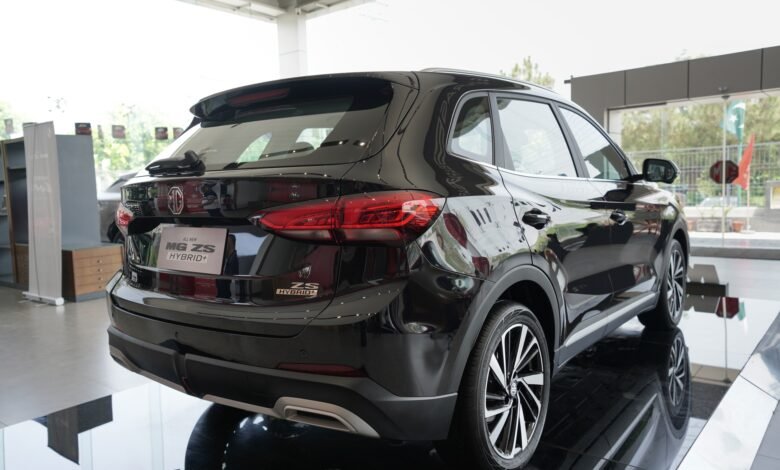
Modern vehicles are packed with new technologies that can warn drivers about potential hazards, help them maintain road discipline, and even apply the brakes automatically in extreme conditions. As Pakistan shifts into the modern era of EVs, PHEVs, and other modern tech, every car driver must know what these modern features are and how they perform. Imagine driving through Karachi, Lahore, or Islamabad during rush hour. A motorcycle suddenly cuts across your lane, a pedestrian steps into the road without warning, and a rickshaw appears in your blind spot. Modern vehicles are increasingly equipped with technologies designed to help drivers react to situations like these. Collectively, these technologies are known as Advanced Driver Assistance Systems (ADAS). While every new vehicle launching in Pakistan is equipped with ADAS, many buyers still struggle with understanding what these features are and whether they are as useful as they are in brochures.
What is ADAS?
Before we jump into the many systems that comprise the ADAS package, it is important to understand what an ADAS system is. ADAS is the short form of Advanced Driver Assistance Systems, and these are implemented in a vehicle to improve driver and passenger safety, reduce accidents, and provide some auxiliary information to the driver that may not otherwise be instantly obvious to them. It is important to note that the ADAS system is only used as a tool, and it is, in no way, a replacement for the driver. ADAS is not self-driving technology, and hence, the driver must remain fully aware of the vehicle and its surroundings as well.
How Do ADAS Features Work?
The ADAS system works with a complicated combination of both hardware and software. The hardware includes physical cameras that are placed outside the vehicle on all sides, along with a radar, ultrasonic sensors, and in some instances, a LiDAR as well. A LiDAR or Light Detection and Ranging system is a remote sensing technology that uses rapid laser pulses to measure distances. Based on how much time it takes for the light to bounce off objects and return, the system makes accurate 3D maps and models of the environment and presents them to the driver.

While LiDAR is only found in high-end vehicles, normal ADAS are becoming common and are now mostly found in nearly all modern vehicles. The physical hardware outside the vehicle, such as the radars, cameras, and ultrasonic sensors, gathers vital information from the outside of the vehicle and feeds it to the main computer of the vehicle. Based on this information, the computer triggers a response in the vehicle. The ADAS features can be turned on and off based on the driver’s requirements at any time.
ADAS Levels
ADAS comes in different levels, and based on the number of features available in a vehicle, it is categorized accordingly.
Level 0:
This is the base level of ADAS, and no features are included in it. Most of the older vehicles in Pakistan do not come with any sort of ADAS features, so they fall in the Level 0 category. Examples include 2007 Toyota Corolla Altis 1.8, 2010 Honda City i-Vtec, and 2011 Suzuki Alto.
Level 1:
This is the first level of ADAS where a basic set of features is added to the vehicle. They are single assistance features and require shared control between the driver and the vehicle’s computer. It operates either speed (longitudinal) or steering (lateral). Common features in Level 1 ADAS include Adaptive Cruise Control (ACC), Lane Keeping Assist, and Standard Cruise Control.
Level 2:
This is the second level of ADAS, and it involves multiple systems working together. This is also sometimes called partial vehicle automation because multiple systems can work together to drive the vehicle on their own depending on the situation. This is the most common level of ADAS, not just in Pakistan but also worldwide. Nearly all Chinese cars are coming with a Level 2 ADAS feature set implemented in them. Common features in Level 2 ADAS include Adaptive Cruise Control (ACC) with Stop & Go, Lane Centering Assist (LCA), Lane Keeping Assist (LKA) and Lane Departure Warning (LDW), Autonomous Emergency Braking (AEB), Forward Collision Warning (FCW), Traffic Jam Assist (TJA), Blind Spot Monitoring, Rear Cross-Traffic Alert, and Traffic Sign Recognition.
Level 3:
This is the most advanced level of ADAS found in driver-operated vehicles, and it is also extremely rare in the entire world. Very few vehicles currently come with Level 3 ADAS features, but one common example is the Mercedes-Benz Drive Pilot. It is the world’s first certified SAE Level 3 conditionally automated driving system and is found in flagship models like the S-Class or EQS Sedan. Common features in Level 3 include Eyes-Off Operation, Conditional Traffic Jam Pilot, Environmental Detection, and Safe Fallback Transmission.
Level 4:
Level 4 moves beyond human interactions and makes the vehicle nearly autonomous. Vehicles with Level 4 ADAS can drive fully automatically in geofenced areas such as cities or specific weather conditions. No driver is needed for these vehicles. These vehicles are also equipped with fail-safe systems where, if something stops working, the vehicle finds a safe parking spot and stops there. These are features commonly used for autonomous taxis, shuttles, and delivery pods.
Level 5:
The Level 5 ADAS completely removes any sort of human intervention, as there are no pedals, steering wheels, or any traditional human input devices in the vehicle. Acceleration, braking, steering, and everything else is controlled by computers and AI. These vehicles work on universal routing along with 3D LiDAR, radar, and cameras.

Key ADAS Features Explained
In this section of the guide, you will find detailed explanations of each of the ADAS features.
Adaptive Cruise Control (ACC):
Adaptive Cruise Control (ACC) allows the driver to set a speed and the vehicle follows it. The Adaptive differs from a standard cruise control as it can adjust to incoming traffic and hazards, slow down, and then regain the speed once it is safe to do so. This is excellent for use on motorways, long highways, and long routes where normal urban traffic is not present.

For understanding it, think of a scenario where you are cruising on the motorway at 120 Kmph in the middle lane, but a bus ahead is overtaking a truck at 100 Kmph. The bus will come into the middle lane, overtake it, and then go back to the third lane. Your adaptive cruise control is set at 120 Kmph so it will detect the bus merging, automatically slow down, and once the bus is back in the third lane, the onboard computer will increase the vehicle speed back to 120. With normal cruise control, you will have to manually press the brakes to slow down, but with the adaptive cruise control, your vehicle’s computer will do it for you. The ACC is helpful in reducing fatigue in long journeys.
Autonomous Emergency Braking (AEB):
Autonomous Emergency Braking, or AEB, is a feature that allows the vehicle to brake on its own when it detects an obstacle or a potential collision from the front. This feature is designed to reduce frontal accidents by eliminating the quick reaction of the driver, as the vehicle’s computer does on its own. No matter how reactive a driver is, a computer is always faster, so it reacts instantly to incoming hazards. This feature is excellent for elderly drivers who become slow in their reactions due to their age.
Forward Collision Warning (FCW):
Another useful feature, Forward Collision Warning usually works with the Autonomous Emergency Braking system. The purpose of the Forward Collision Warning is only to warn the driver if there is an incoming collision. It is only a warning sound that activates when a vehicle speed is high, and it is approaching a stationary vehicle up ahead or any other hazard. After activating, if the AEB is turned on, both systems will work together to bring the vehicle to a complete stop before the collision.
Lane Departure Warning (LDW):
Lane Departure Warning is also just a warning that alerts the driver with a sound when the vehicle is about to leave its lane, whether it is at slow speed or at high speed. This is just a passive warning and does not do anything beyond sounding the alarm. It is often confused with the Lane Keeping Assist, which is a separate ADAS feature.
Lane Keeping Assist (LKA):
Lane Keeping Assist (LKA) steers the vehicle back into the lane if it is veering outside without any driver input. This system has access to the steering wheel, and it can rotate it enough to pull the vehicle back into the lane. This system requires clear road lane marking to work properly. This is different than the LDW because this is not just an audio warning, but this system actively pulls the vehicle back into the lane.

Blind Spot Monitoring (BSM):
Probably one of the most useful features in any ADAS set, the Blind Spot Monitoring system notifies the driver if there is a bike, rickshaw, or another vehicle in its blind spot on both sides. Usually, this works with a small yellow light fixed in both the left side and the right side mirrors of the vehicle, and this light turns on if it wants to deliver a warning to the driver of a potential hazard.

Rear Cross Traffic Alert (RCTA):
The Rear Cross Traffic Alert is not a very common ADAS feature, but it is now starting to arrive in most packages. This system comes into play when a vehicle is trying to reverse out of a parking spot, and this system helps them by warning them of any cross traffic that might be passing behind them to avoid hitting them.
Traffic Sign Recognition (TSR):
Traffic Sign Recognition system is a passive system that reads road markers, signs, speed limits, and other informational signs and displays them on the heads-up display for the driver. This helps the driver to understand what needs to be kept in mind while driving in that particular area. The most common example is that this system constantly displays the speed limits of the road, which allows the driver to maintain speeds at any given time.
Driver Attention Monitoring:
This system detects driver fatigue using a camera that is placed inside the cabin where it can read the driver’s face clearly. It uses different signals like eyes, facial expressions, attentiveness, and responsiveness to determine whether the driver is fit for driving or not. If the driver falls asleep on the wheel, this system is able to wake up the driver by gentle braking and, in extreme cases, even parking the car on the side, honking the horn, and turning on the hazard lights.
Which ADAS Features Matter Most for Pakistani Roads?
While all ADAS features are helpful in one way or the other, certain features are more useful to have than others. It is important to know which ADAS features a vehicle comes with so that you can make an informed decision. The Pakistani road network is not the most advanced in the world, and many factors come into play that make certain ADAS features more useful than others when driving in Pakistan.
Some of the challenges that hinder ADAS features in Pakistan include poor road markings, which can seriously affect how Lane Keeping Assist and Lane Departure Warning can perform effectively. The traffic on the roads is unpredictable, with bikers and rickshaw drivers suddenly popping out of smaller link roads and side roads into main roads without any warning. In such scenarios, the AEB can be harmful rather than useful as it may lead to sudden braking and cause an accident if the vehicle behind fails to brake. In addition, with people constantly crossing the roads in front of vehicles, the AEB can also cause driver discomfort with constant braking.
Another issue while driving on Pakistani roads is animals that suddenly cross the road by running. Cows, donkeys, deer, cats, and dogs are often seen running across the roads even on main highways, which can cause an accident. ADAS struggles with unpredictable obstacles, so this is also a limitation of the system. In extreme weather conditions, such as dust, heavy rain, or fog, the sensors, cameras, and radars can become dirty and decrease their visibility. Pakistan is a dust-heavy country, so this is a common issue here.

Keeping in view the Pakistani road dynamics, the chart below shows how the ADAS features are ranked in terms of their usability on the Pakistani roads.
| ADAS Feature | Importance | Comment |
| Adaptive Cruise Control (ACC) | Essential | Extremely helpful on motorways and long routes |
| Autonomous Emergency Braking (AEB) | Not Successful in Pakistan | Constant braking leads to most people just turning it off |
| Forward Collision Warning (FCW) | Essential | Excellent for warning distracted drivers |
| Lane Departure Warning (LDW) | Useful to have (Effective in cities) | Since it is just an audio warning, it is useful to have in certain scenarios |
| Lane Keeping Assist (LKA) | Not Successful in Pakistan | Poor road markings confuse this system, leading to it being not effective in most cities |
| Blind Spot Monitoring (BSM) | Essential | Extremely helpful in tight, urban driving |
| Rear Cross Traffic Alert (RCTA) | Useful | Useful for people who park regularly in tight parking plazas |
| Traffic Sign Recognition (TSR) | Useful | Helpful for driving on motorways and open highways |
| Driver Attention Monitoring | Useful | Helps with fatigue on longer routes |
Key Vehicles in Pakistan Offering ADAS Features:
| Vehicle | ADAS Availability |
| BYD Atto 3 | Yes |
| BYD Atto 2 | Yes |
| BYD Seal | Yes |
| Honda Civic Turbo RS | Yes (Full Honda Sensing Suite) |
| Honda City Aspire 1.5 | Select Honda Sensing Features |
| Hyundai Elantra | Yes (Select Hyundai SmartSense) |
| Haval H6 and H6 HEV | Yes (With Auto-Parking and Auto-Reverse) |
| Haval Jolion and Jolion HEV | Yes (Level 2 ADAS package) |
| MG HS, HS Essence, and HS Hybrid+ | Yes (MG Pilot) |
| Hyundai Tucson | Yes (Hyundai SmartSense) |
| JMEV Elight and EV3 | Yes (Basic) |
| Deepal S07 | Yes |
| Deepal S05 | Yes |
| Jaecoo J7 | Yes |
| Jaecoo J5 | Yes |
| KIA Sportage L | Yes |
| Proton X70 (Premium FWD) | Yes (Early Version) |
| Chery Tiggo 7, 8 and 9 | Yes |
ADAS Maintenance:
It goes without saying, but ADAS features require some sort of regular maintenance as well. Since the cameras and radars are placed outside the vehicle, they must be clean because if they get dirty, the cameras will not work effectively. These should not be blocked as well by stickers, aftermarket mods, or any other item that hinders their operation. In addition, in case of an accident, properly trained staff should perform the repairs so that these systems are brought back online properly for their use. They must be calibrated properly before they can deliver accurate data. Incorrect wheel alignments can also deliver false data, delivering misinformation to the computer and making wrong ADAS moves.
Common ADAS Myths
| Myth | Truth |
| ADAS drives the car | The driver must remain active and is responsible for safe handling of the vehicle |
| AEB prevents every accident | This is not true because AEB can respond even to not-so-serious issues, which is why the driver should remain active at all times |
| ADAS works perfectly | This is true only within its operating limits and considering that its calibration is correct and all radars, cameras, and sensors are clean and operational |
| ADAS replaces experience | No computer can ever replace human experience, so the driver must never rely completely on the ADAS features |
Related: Electric Cars Explained: Hybrid vs Plug-in Hybrid vs REEV vs EV
As Pakistan’s automotive market rapidly shifts toward hybrids, plug-in hybrids, and fully electric vehicles, ADAS in Pakistan is no longer a premium luxury reserved for flagship models. It is becoming a standard safety feature across every price segment. Understanding what these systems can and cannot do will help buyers make informed decisions and use them more effectively. While no technology can replace a responsible driver, ADAS provides an additional layer of safety that is likely to become a defining feature of modern vehicles in the years ahead.
Related Guides: