Pakistan Finalizes 5-Year Auto Policy (2026–2031): Enforces Mandatory Export Quotas, EV Tax Relief, and Value Addition
Price Locks, 1% EV Sales Tax, and Easier Loans: What the 2026–2031 Policy Means for Car Buyers

Islamabad – The Federal Government has completed the proposed Automotive and Auto Parts Manufacturing Policy (2026-2013), introducing a performance-driven framework designed to transition local assembly plants from protected domestic units into competitive global exporters.
Formulated by a panel of Ministers, headed by Power Minister Sardar Awais Ahmad Khan Leghari, the policy marks a decisive departure from traditional Special Regulatory Orders (SROs) and flat tariff protectionism. In their place, the government is introducing legally binding export quotas, audited localization metrics, aggressive tax relief for low-emission vehicles, and structural consumer protection mandates.

“We are attempting to strike a balance between the need for local industry protection and opening the automobile sector to genuine global competition,” stated Minister Leghari during the finalization session. “For decades, Pakistani consumers have subsidized an infant auto industry through high protective walls without seeing a single dollar in export revenue. This policy makes manufacturing licenses explicitly contingent on global performance.”
Mandatory Export Quotas or Import Penalties:
Under the new framework, Original Equipment Manufacturers (OEMs) producing passenger cars, SUVs, and jeeps will no longer enjoy unconditional access to local sales. Automakers must scale their export values from zero in FY2026-27 to 12% of total factory-gate production value by FY2029-30. Target thresholds for tractors, two-wheelers, and three-wheelers are set at 15%.
To enforce compliance, OEMs that fail to meet these milestones will face additional customs duties on imported Completely Knocked-Down (CKD) kits equal to the value of their export shortfall. Repeated failures could ultimately lead to cancellation of their assembly license. Compliant manufacturers, however, will receive a 10% rebate under a Duty Drawback on Local Taxes (DLTL) scheme, plus a 5% bonus for year-on-year export growth. Overall auto sector exports are projected to reach $4.58 billion over the five-year policy cycle.
Audited Localization and MDVA:
The policy also eliminates vague localization promises in favor of a quantitative Minimum Domestic Value Addition (MDVA) metric. Localization will be strictly calculated based on local materials and parts (75% weightage), local labor (10%), and factory overheads (15%).
- Conventional Cars: Must achieve 40% domestic value addition by FY2030–31.
- Commercial Vehicles & Tractors: LCVs and buses are targeted at 40%–45%, while tractors must hit 80%.
- Bikes & Rickshaws: Localization target is set at 90%.
- New Energy Vehicles (NEVs): Requirement starts at 10% and scales to 15% by 2031.
Manufacturers will be required to submit biannual cost breakdowns subject to third-party audits to stop artificial value addition reporting.
Local Industry Concerns:
While the government views the performance-based approach as a necessary modernization effort, domestic assemblers have expressed significant reservations.
Pakistani automakers support export growth, but forcing mandatory export quotas without first addressing high grid electricity prices, expensive raw material imports, and local interest rates puts us at a severe disadvantage,” warned a spokesperson for the Pakistan Automotive Manufacturers Association (PAMA). “If the government simultaneously lowers tariffs on imported Completely Built Units (CBUs) or relaxes used-car import schemes, billions of dollars invested in local vendor supply chains over three policy cycles could be put at risk.”
Aggressive Push for NEVs and Hybrids:
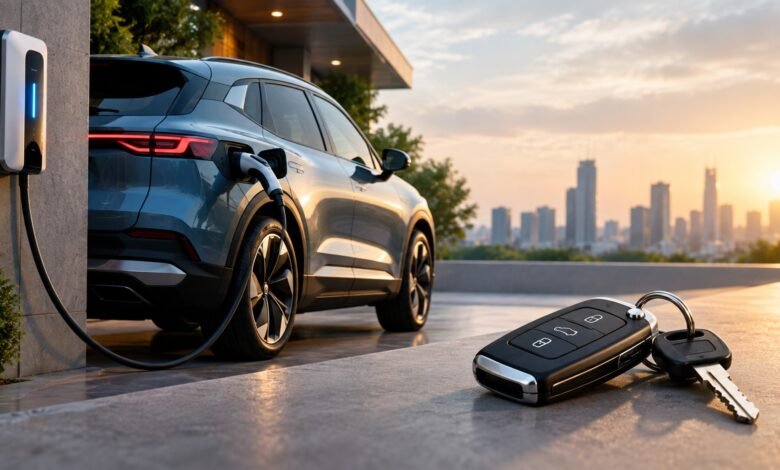
To combat urban smog and curb fuel import spending, the framework places Battery Electric Vehicles (BEVs), Range-Extended EVs (REEVs), and Plug-In Hybrids (PHEVs) under a tax structure that provides their buyers a concession. Sales tax on NEV components and raw materials has been slashed to 1%, alongside complete exemptions from Federal Excise Duty (FED), Capital Value Tax (CVT), and Withholding Tax.
To fund these concessions, the government will impose higher FED rates on high-engine-capacity conventional internal combustion engine (ICE) vehicles: up to 20% on vehicles exceeding 3,000cc. Auto financing limits for NEV purchases will also expand from Rs. 3 million to Rs. 10 million.
Market Impact and Economic Outlook:
Industry observers note that while the policy offers clear fiscal direction, its execution will dictate market success.
“The shift from broad SRO protection to quantitative metrics like MDVA is an economically sound move,” noted Ali Tanveer, a senior automotive and equity analyst at a Karachi-based brokerage house. “However, expecting local assemblers to hit 12% export quotas within four years while major regional hubs like Thailand and India operate at far higher economies of scale is ambitious. OEMs will likely focus their exports on low-cost regional markets in Africa or South Asia to avoid missing targets and incurring hefty CKD penalties.”
Consumer Protection and Safety Rules:
Addressing long-standing consumer grievances over supply delays and ‘on-money’ premiums, the policy mandates price lock guarantees upon booking confirmation, allowing price adjustments only in cases of statutory tax changes.
Pakistan is also accelerating compliance with international safety standards, moving to enforce 62 UNECE WP.29 safety regulations while introducing 45 additional standards by 2029 through a newly established Pakistan Auto Testing Institute.
The committee projects that the policy will generate a net fiscal saving of Rs. 21.11 billion over 5 years, balancing tax exemptions with revenue from conventional vehicle levies while restructuring Pakistan’s auto ecosystem for a cleaner, export-driven market.
Related News: