
MG Motors Pakistan has officially launched the second-generation MG ZS SUV in the country. It offers a major upgrade over the first-generation ZS in nearly all aspects. It comes loaded with modern tech, an ADAS suite, and the biggest addition: a Hybrid+ system. With its second-generation, the MG ZS is ready to tackle the current influx of hybrids and electric vehicles in Pakistan. This is our first-look review of the second-generation MG ZS Hybrid+ Essence.
It is much smaller than MG’s bigger MG HS, and it sits in the C-category segment. MG has introduced three distinct variants. You can purchase the MG ZS Vibe, which is a petrol-only variant, or if you prefer the new Hybrid+ technology, you can either choose the Excite or the top-of-the-line Essence variant. Our first-look review is based on the Essence variant, which features everything that the second-generation ZS has to offer in Pakistan.

Key Specifications of the MG ZS Hybrid+ Launched in Pakistan
On paper, the new MG ZS Hybrid+ has the following key specifications:
| Specification | MG ZS Hybrid+ |
| Powertrain | Full Hybrid |
| Petrol Engine | 1.5L naturally aspirated |
| Hybrid Battery | 1.83 kWh |
| Combined Power | 212 hp |
| Combined Torque | 465 Nm |
| Transmission | 3-speed hybrid transmission |
| Drive | FWD |
| Seating | 5 |
| Boot Space | 443L |
Exterior Design – A Major Departure From the Old ZS
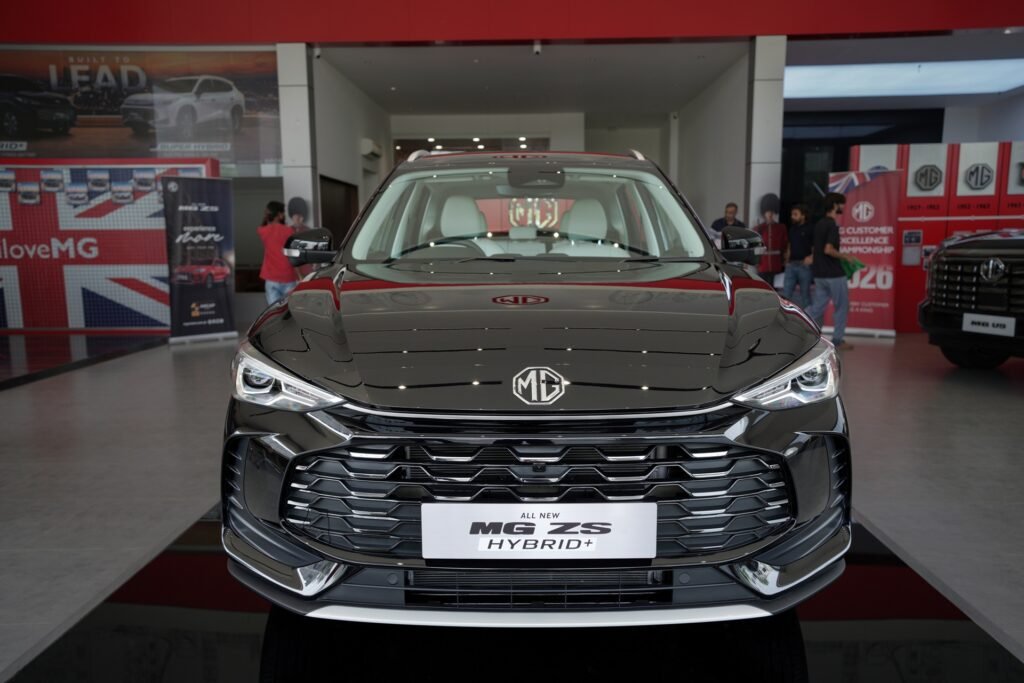
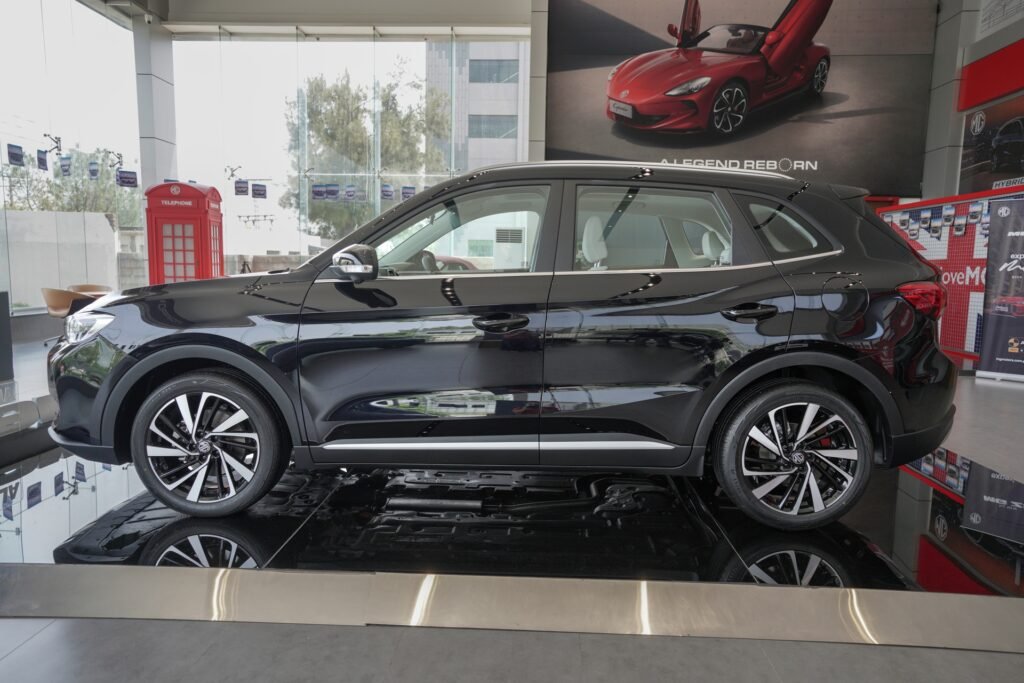
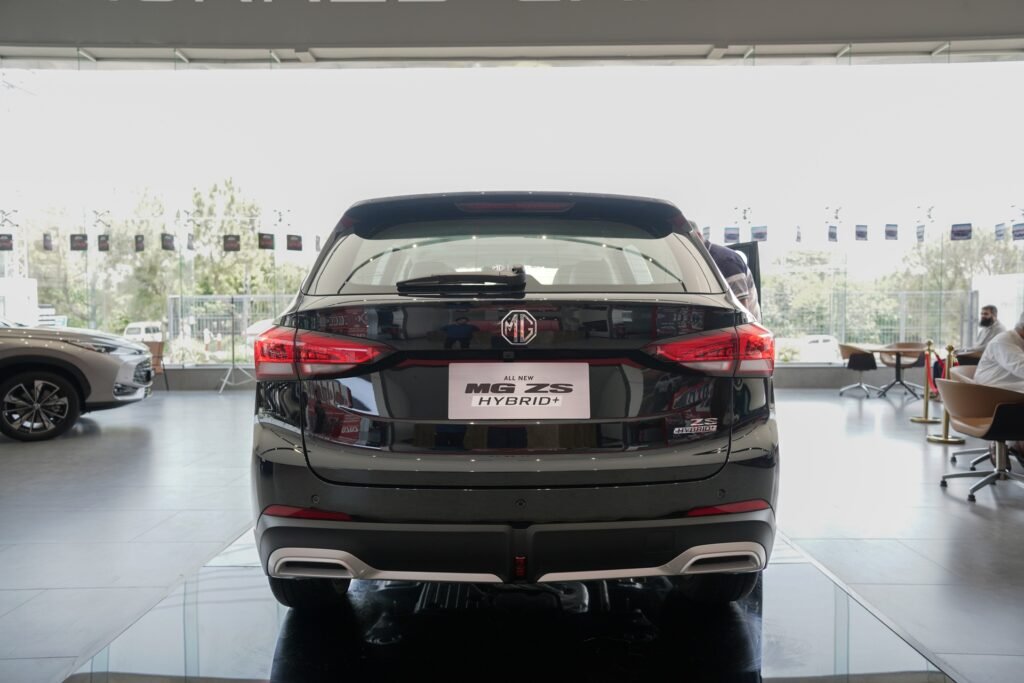
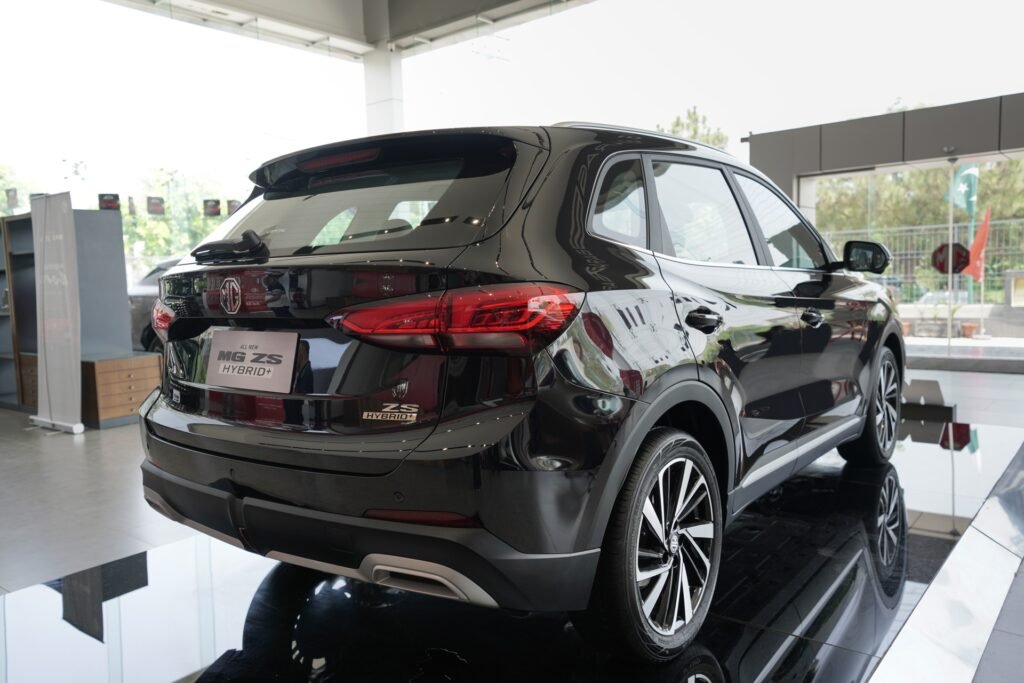
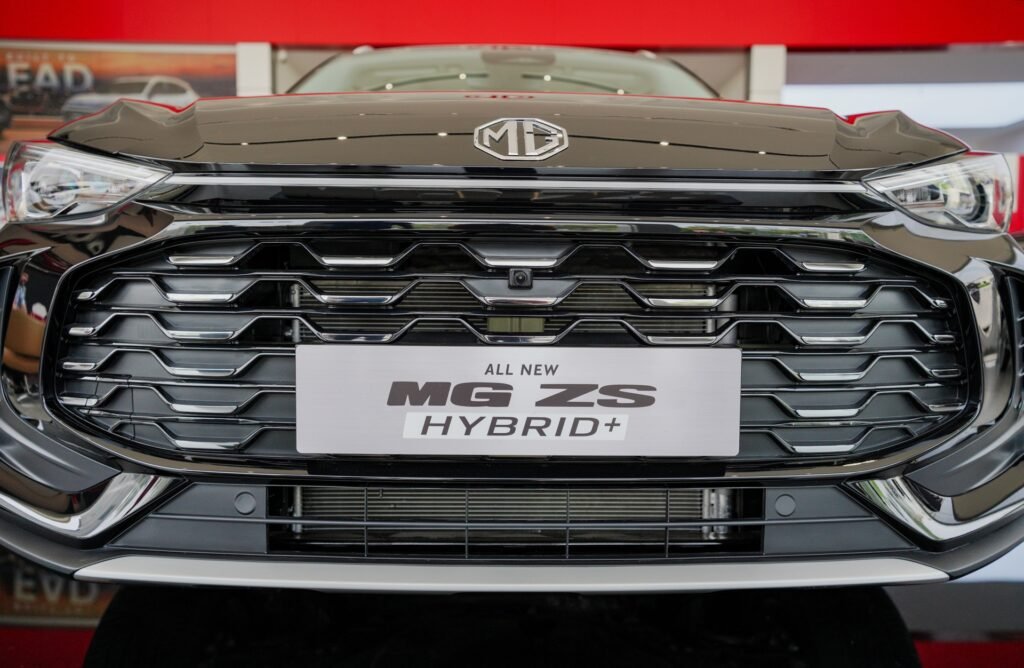
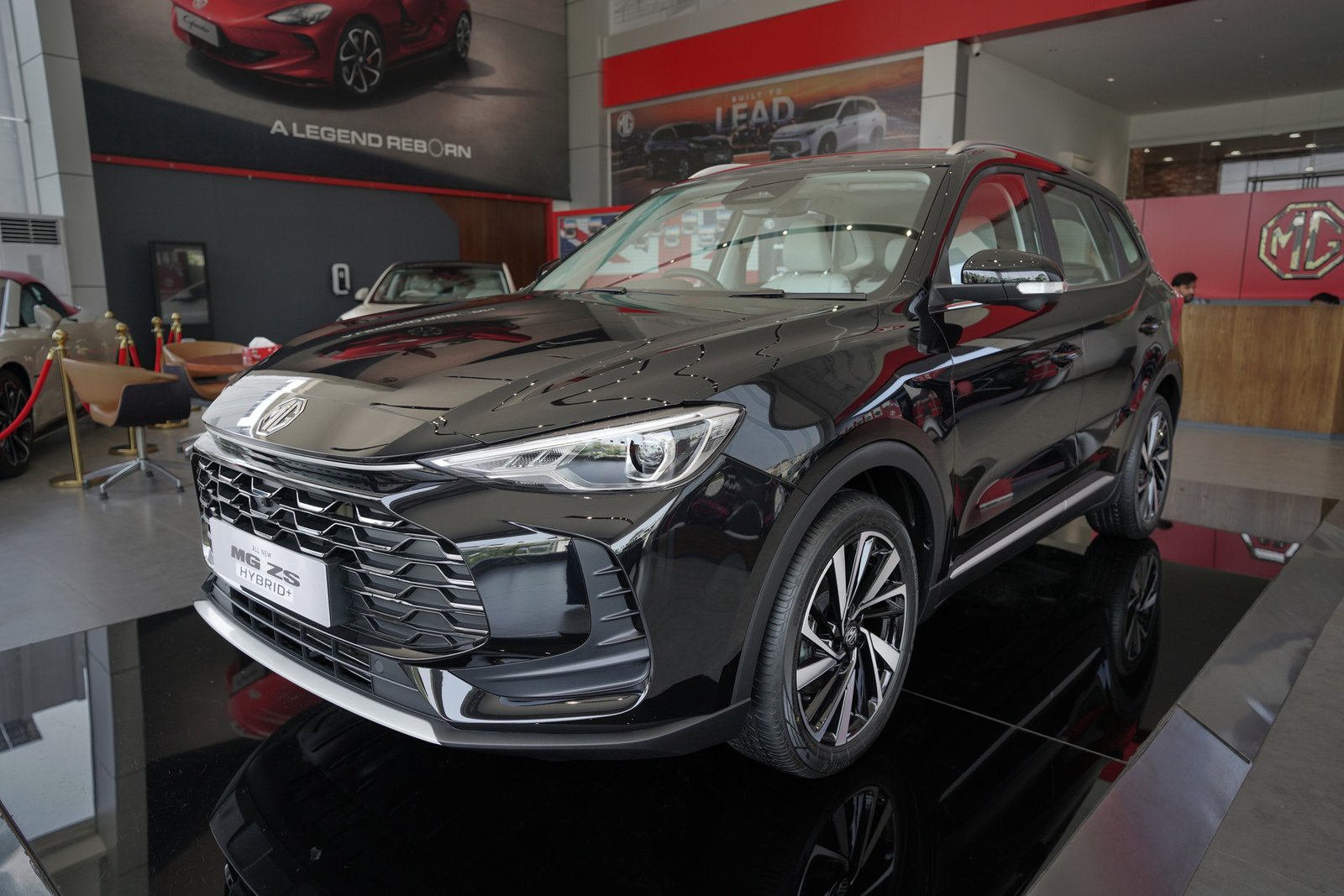
As soon as you see the new MG ZS Hybrid+, you can instantly recognize its modern design and notice that it is a major update from the previous generation. While the original featured a softer, rounded profile, the new MG ZS Hybrid+ features a much more substantial profile. It is longer, wider, and slightly taller than the first generation. Its size is now much closer to full-sized SUVs rather than smaller crossovers. A longer wheelbase also means that you get more space inside the cabin for both luggage and passengers.
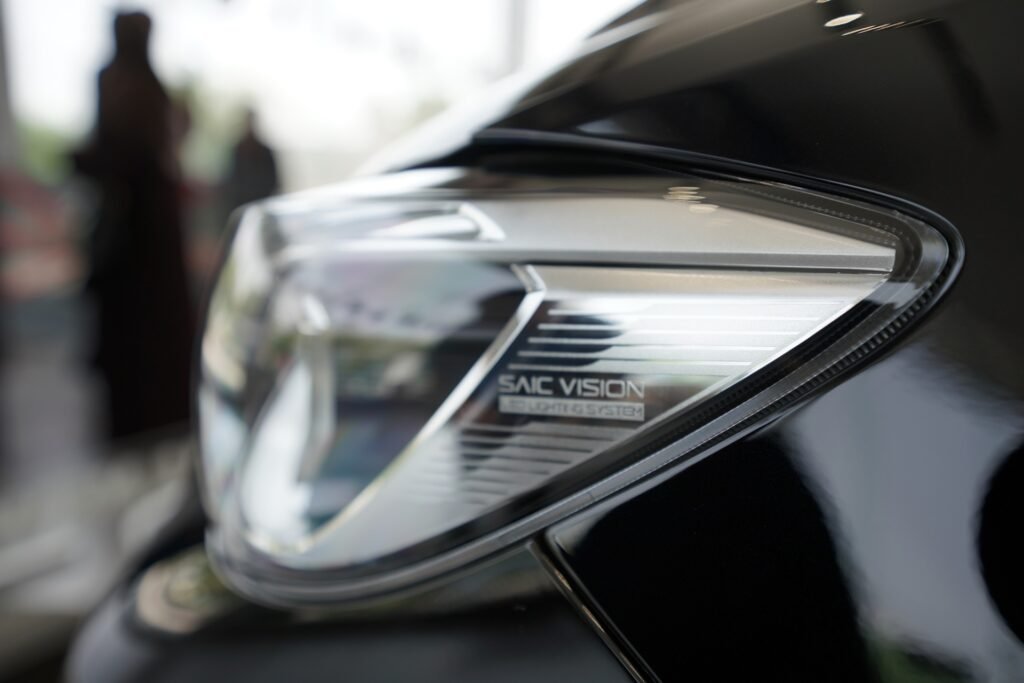
The front of the MG ZS features a two-layer layout, as the front end uses a split design. With a slim, swept-back LED headlight cluster taking the top part, the lower part features a massive, low-slung, open-mesh grille which dominates the front fascia. On each side, the standalone headlight housing incorporates sharp DRL accents and LED projectors. A lone chrome strip connects the two headlights, which also forms the top of the massive grille. Under each headlight, you will find an aggressive air duct cover, which goes all the way to the bumper’s end. Subtle chrome finishes give this an extra premium look. This, combined with the front grille, gives the MG ZS an aerodynamic and bold look at the front. In the middle of the grille, you will find its main front ADAS sensor, with two additional sensors located further down in the bumper, on either side of the radiator vent.
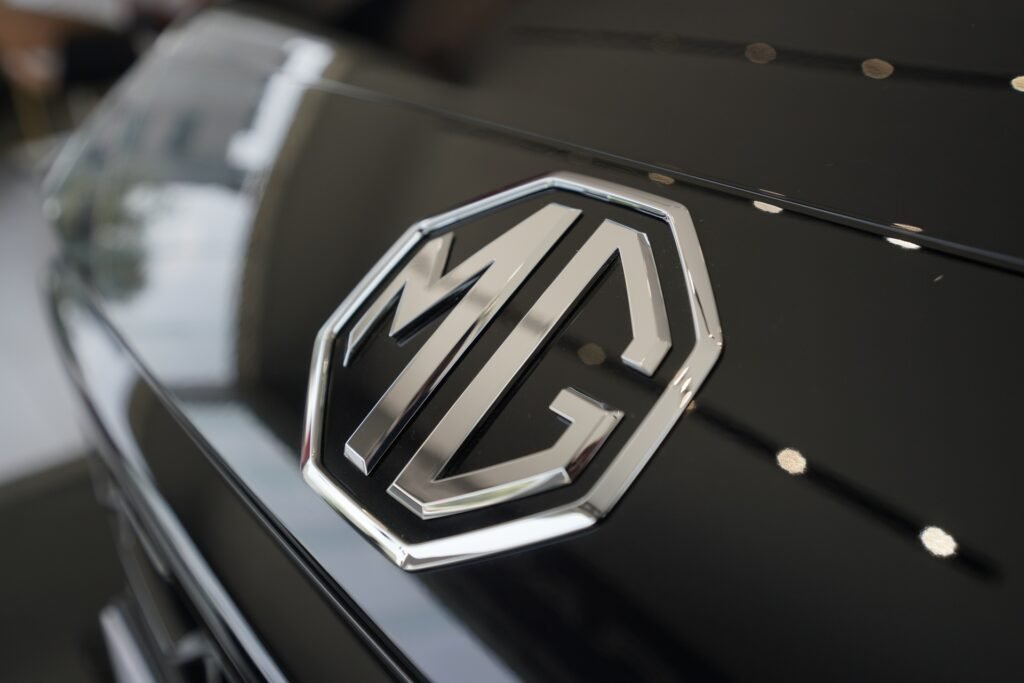
On its nose, you will find the familiar octagon MG badge, which has been relocated out of the grille and onto the nose panel right above the air intake. At the tip of the front bumper, you will find a silver strip which integrates well with the overall black bumper and also serves as the lower front bumper spoiler. If you compare the new MG ZS’s front with the previous generation, you will instantly notice that the newer one is more aggressive, has a bolder personality, and also has more design features than the original.
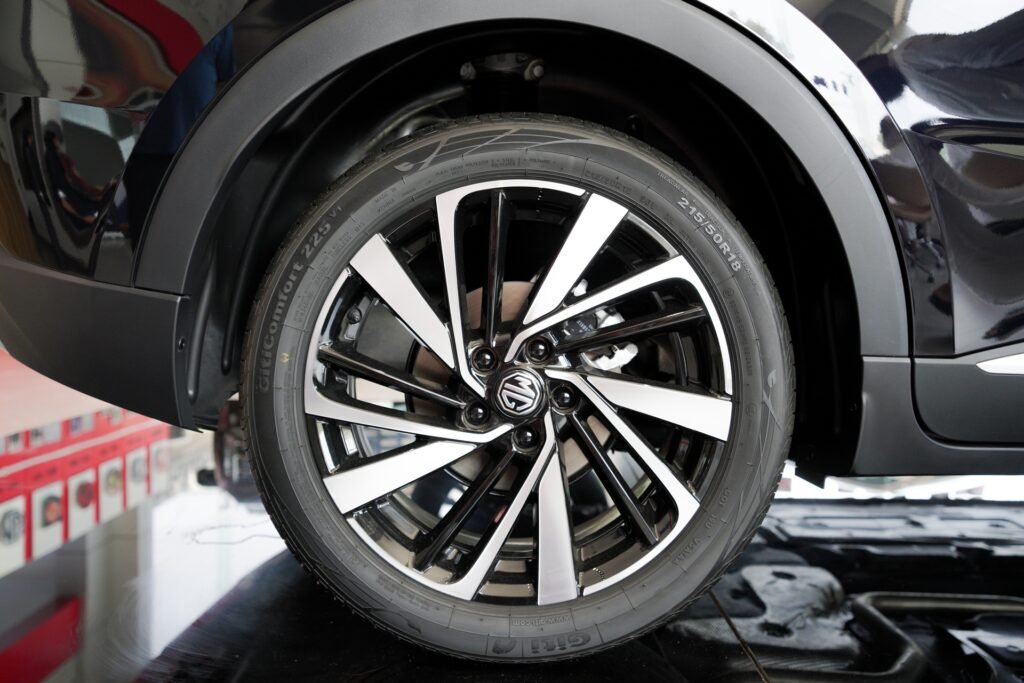
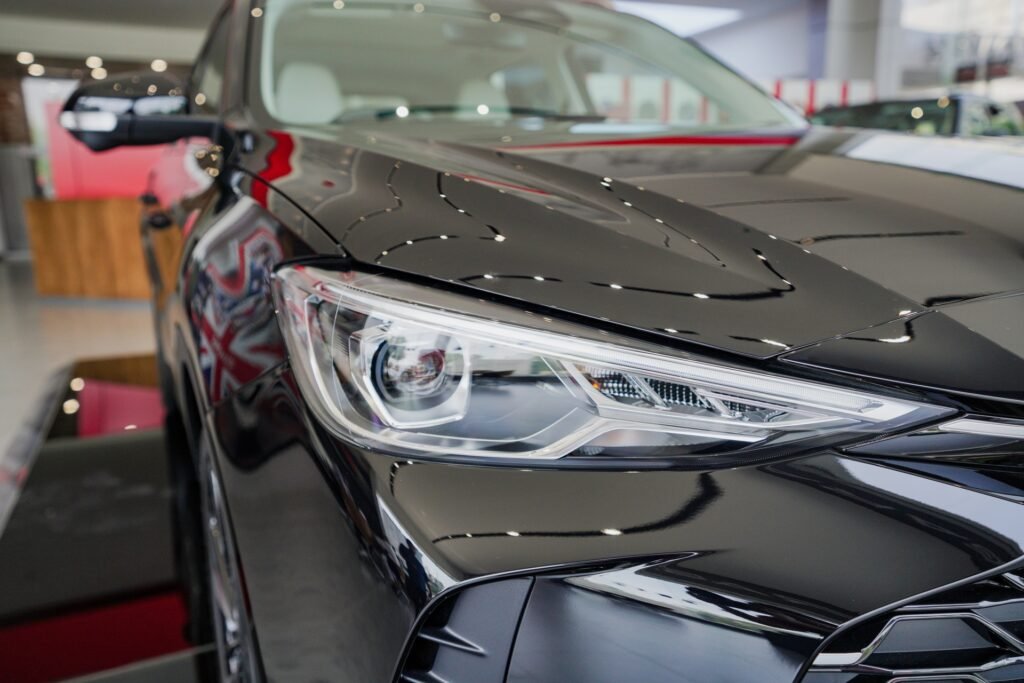
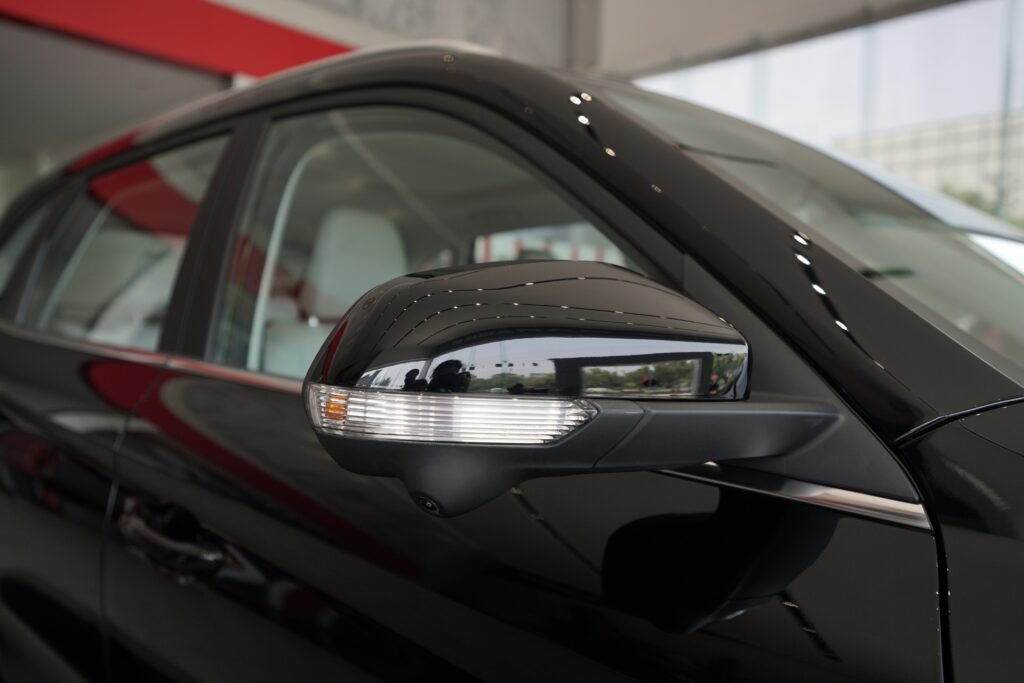
Coming to the side of the second-generation MG ZS, you will quickly notice a sculpted character of its chassis. Crisp, carved shoulder lines trace along the body flanks, giving the crossover defined muscular haunches over the rear wheels. A longer overall length and wheelbase (+25mm) lower the vehicle’s visual center of gravity for a sleeker crossover-hatchback stance. At the top, you will see silver rack bars to mount luggage, while on the lower side, you have a black plastic trim that ends the profile with a small chrome strip inside it. This gives the size a subtle finish without overly relying on chrome, and it looks very grounded.
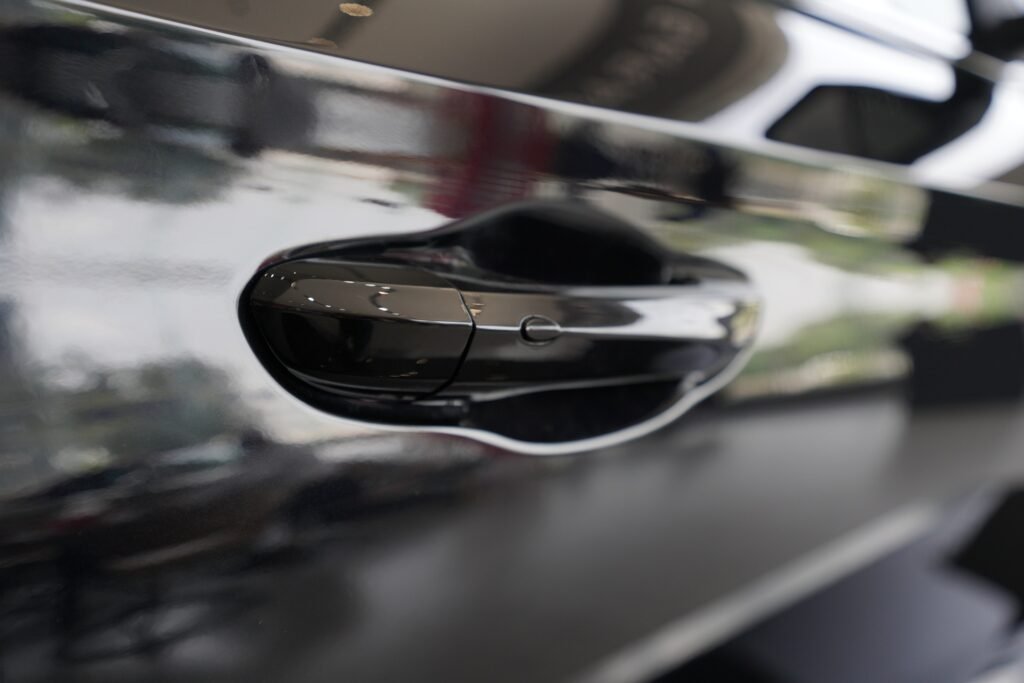
The new MG ZS comes with what MG calls ‘ Sabre’ wheels in 18-inch size, wrapped in Giti Comfort 225 tires. The full tire profile is 215/50R18, which is a fairly decent size for a small SUV. These two-tone alloy wheels sit inside matte black wheel-arch cladding. The door handles have a slight slant, and the side profile has two distinct curves: one near the lower section and one above the door handles, which start from the front and go all the way to the back, giving the side profile a distinct character while maintaining aerodynamics. The roof starts higher at the front and has a decline on the rear end, which ends with the rear top spoiler. It ends before the actual hatch at the behind which bulges out a little to give it a little more trunk space.
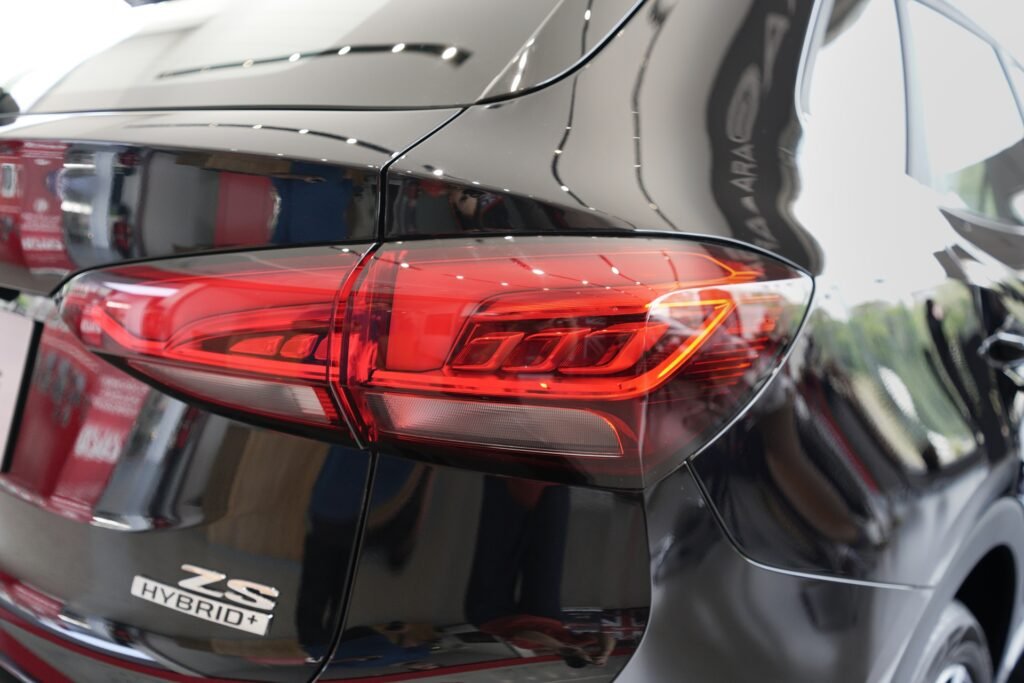
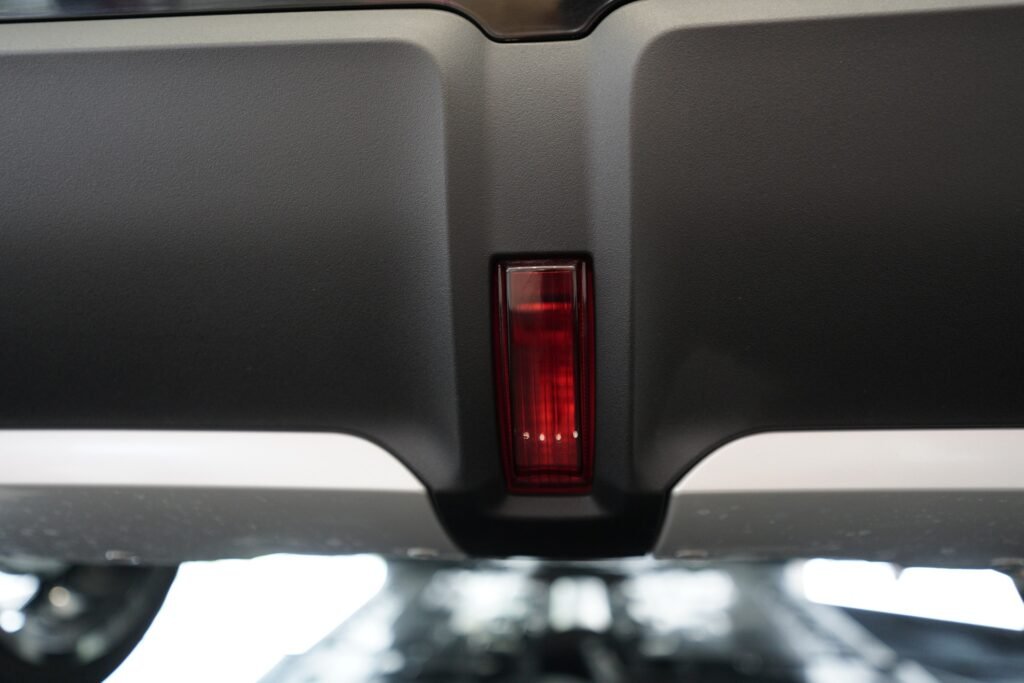
On the back of the new MG ZS, you will find two separate, arrow-shaped light assemblies divided between the quarter panel and tailgate. Unlike the front, on the rear there is no silver trim that connects both lights. Instead, both lights feature an internal cluster of LED light trails that echo the sharp, angular geometry of the front headlights. Below the lights, you have a simplistic dark bumper with silver diffuser-style ribs, an integrated roof spoiler, and silver roof rails to complete the sporty hybrid design. You will also find two reflector lights between the glossy bumper and the black trim, with a single rear red fog light between the small gap in the silver diffuser-like ribs.
Does it Finally Look Like a Modern MG?
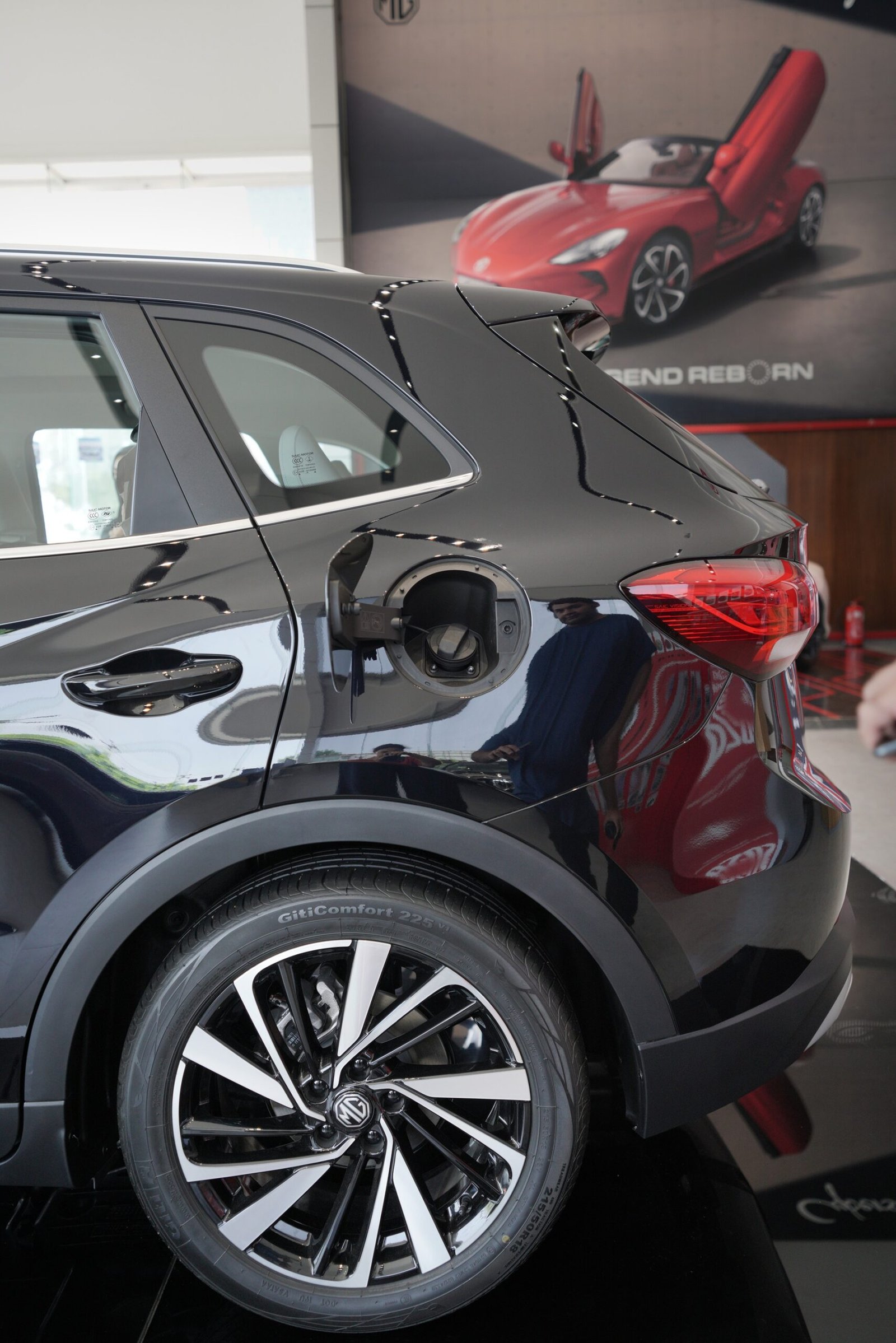
The new MG ZS certainly looks like a Modern MG. At least from the front. It is more aggressive and more premium-looking at the front than at the rear. While the LED lights and sharper curves do give black a more modern look, when you look at the new HS, it certainly lacks the same character. At least this time around, you can instantly recognize and tell that this is an MG product because it follows all of the classic MG lines. If you compare it directly with the new-gen MG HS’s redesign, you will instantly notice that the HS has a more cohesive and distinctive design, while the ZS has made major progress over its predecessor. The new ZS looks way better than its predecessor, and it is enough to make the older one look outdated. There is not much to look at at the back, but the chrome finish at the lower back with prominent LED lights gives a fairly modern look, at least over its first generation.
Interior Design – A Completely New Cabin
While the exterior offers a completely new look for the MG ZS, the interior is where the vehicle shines the best. From its leather-clad seats to interior panels, as soon as you sit inside it, it feels like a premium product. At least the top-trim MG ZS Hybrid+ Essence
Dashboard
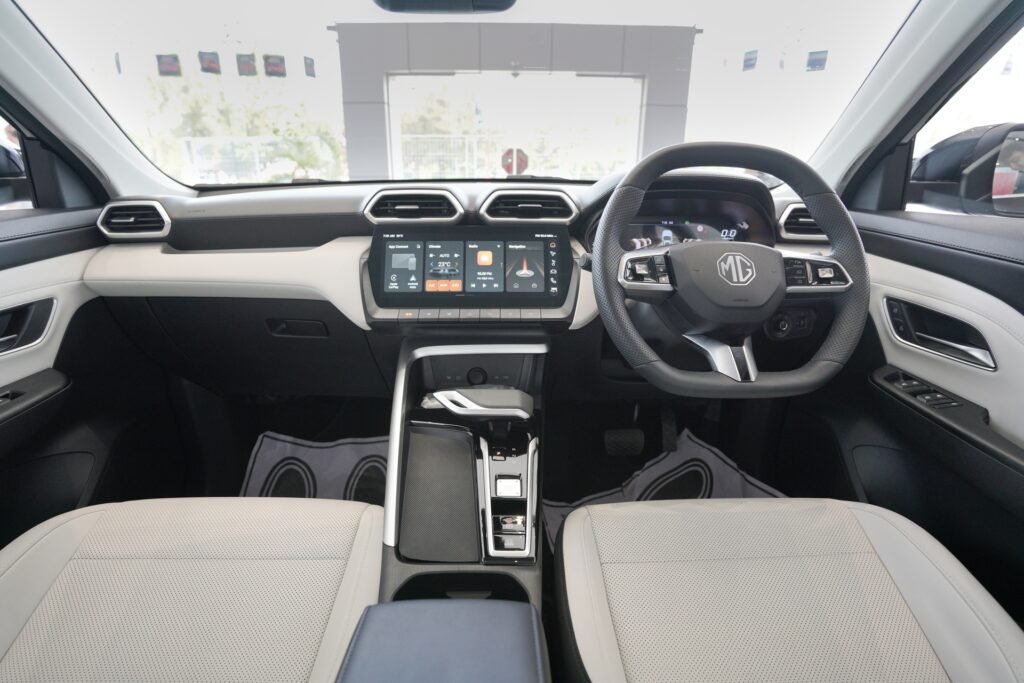
The dashboard comes in a two-tone color, which really gives it a premium look. The combination of light, soft-touch leather with black soft-touch plastic looks very compelling and welcoming. You get four prominent air vents, two in the middle right above the infotainment screen, and one on each end of the dashboard. They are outlined with subtle chrome. The other bit of chrome is found in the steering wheel, door opening handles, and the center dashboard. Similar to the outside, the use of chrome inside the vehicle is also very tasteful, and it does not overstay its welcome. Below the screen, you have two charging ports and a 12v socket.
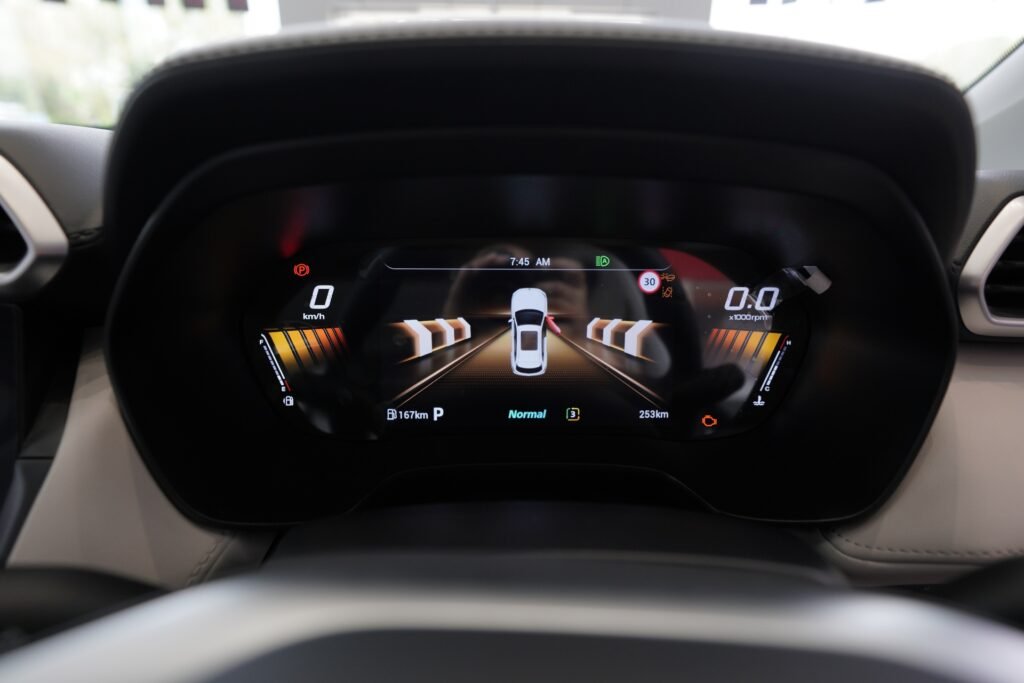
Naturally, the 12.3-inch infotainment display gets your attention quickly because it sits in the middle of the dashboard. The driver gets a personal 7-inch Virtual Driver Display, which serves as a complete digital instrument cluster. There is no heads-up display, so all information is available on this screen. It shows the speed, trip telemetry, drive mode, range, and many other things with cool energy flow graphics since it is a hybrid. This screen also shows changes in the ADAS features, with the middle serving as an information hub.
Unlike many modern SUVs like the Deepal S05, the new MG ZS is not completely free of buttons, as right under its middle infotainment screen, you will find aircraft-style physical controls. This row of piano keys allows you quick access to different functions like volume control, parking indicators, and demisting controls.
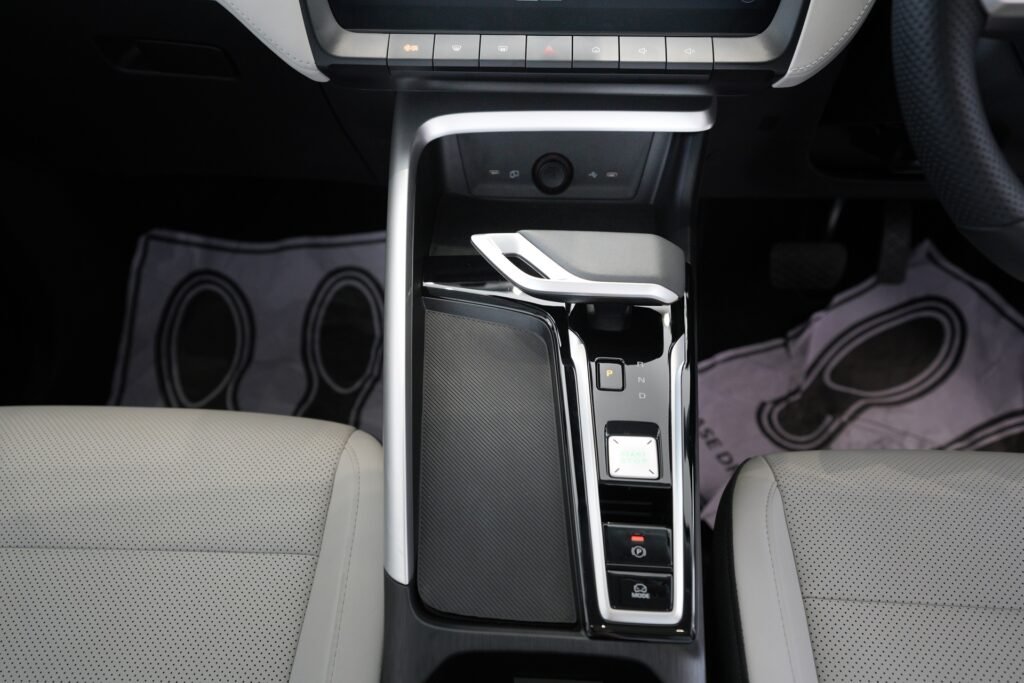
In the center console, you will find a ‘Wing-Style’ Electronic Gear Selector, which is a standout feature of its interior. This replaces the traditional automatic shifter with a modern, jetfighter-inspired rotary/shifter lever control. Right on its flanks, you will find the buttons to change its driving mode, such as Eco, Normal, and Sport, and also a KERS/Regenerative Braking level selector. This is one of the biggest features, as it allows you to select the level of brake force; when you lift the accelerator, the vehicle applies braking to regenerate its battery. At the end, you also have an Electronic Parking Brake (EPB) button.
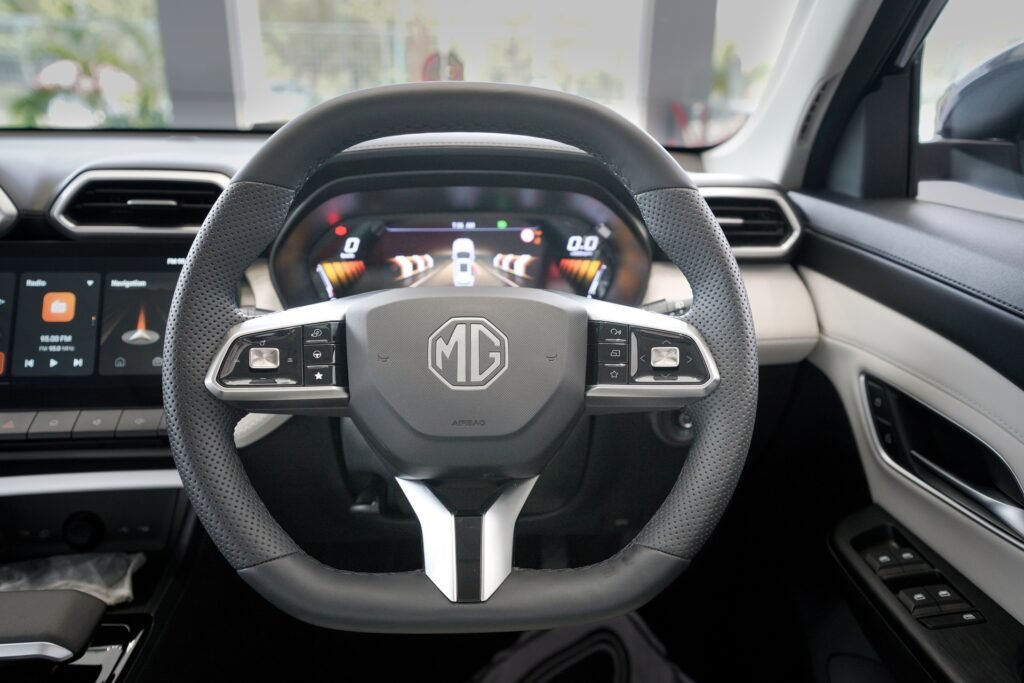
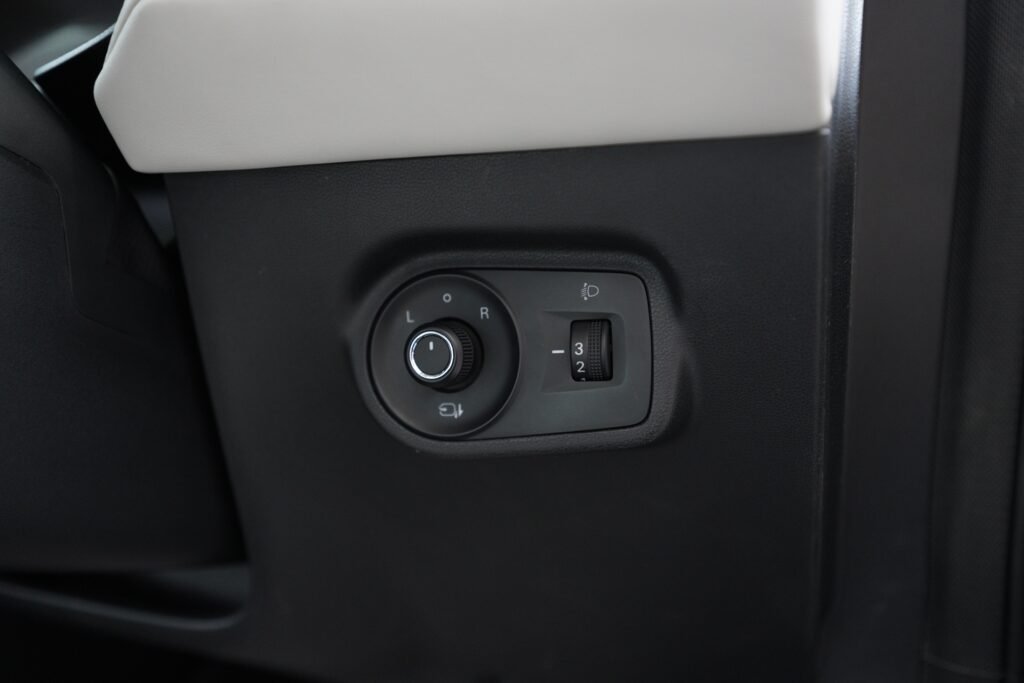
Coming to the steering wheel, the MG ZS Hybrid+ features a multi-function leather steering wheel. It has a flat bottom, three-spoke design with integrated audio, voice control, and driver-assist shortcut buttons. It also features full reach and height adjustment for an optimal driving position for the driver. It matches the rest of the interior’s theme with grey leather and chrome bits with black inserts. On the right side of the steering wheel, down on the dashboard, you have the headlight adjustment dial along with the side mirror adjustment joystick.
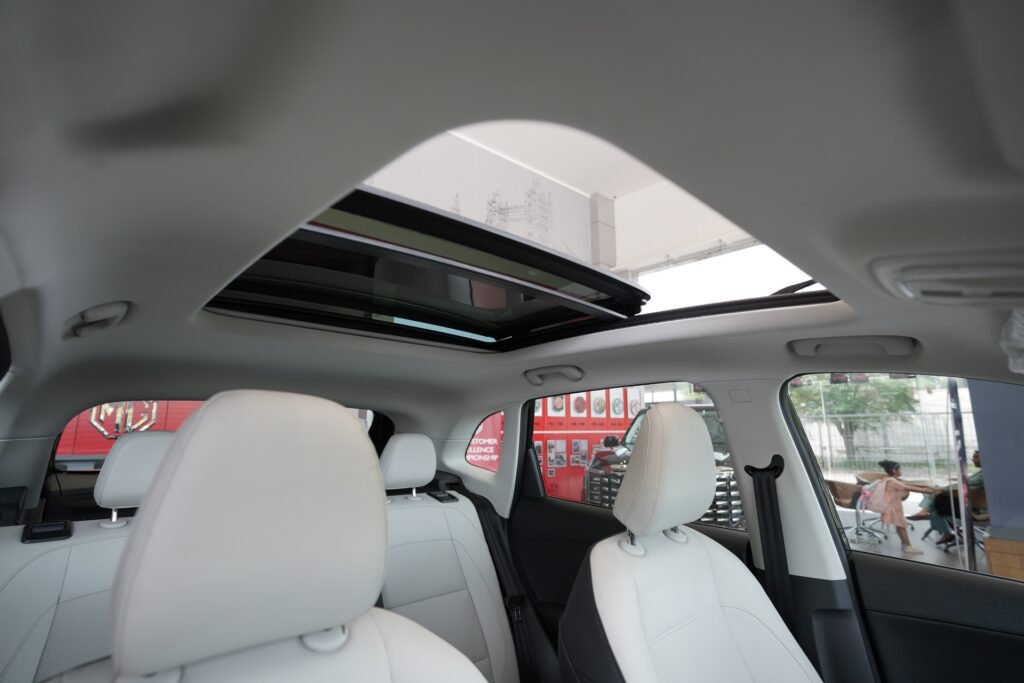
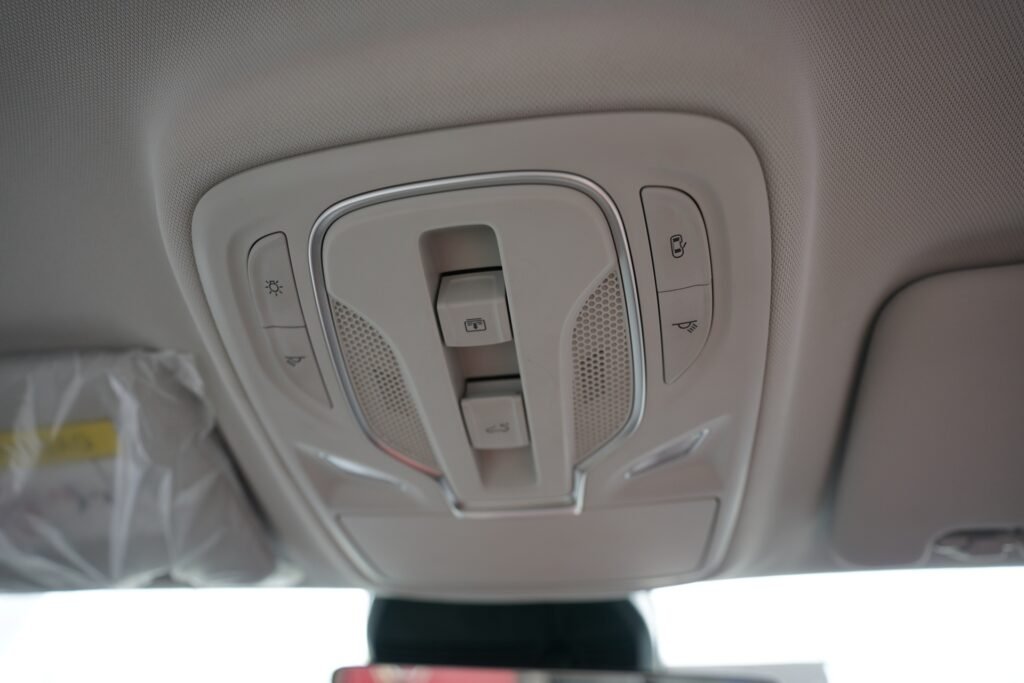
On its roof, you will find a full-length panoramic sunroof, which is yet another feature not common for this category of SUVs and crossovers. It also comes with an electric blind and a bug-catcher at the front, which deploys automatically when the sunroof is opened.
Seating Position
The seating position of the new MG ZS is pretty decent. Getting in and out feels easy because the ZS is not very high and its doors are quite big. The floor remains fairly close to the ground, which makes it easy for anyone to get inside the vehicle and sit on the seat. The seats have ample cushioning, but their height is not too raised to make getting in and out of the vehicle uncomfortable. Since the ride height is low enough, there is no footboard to help climb inside the vehicle.
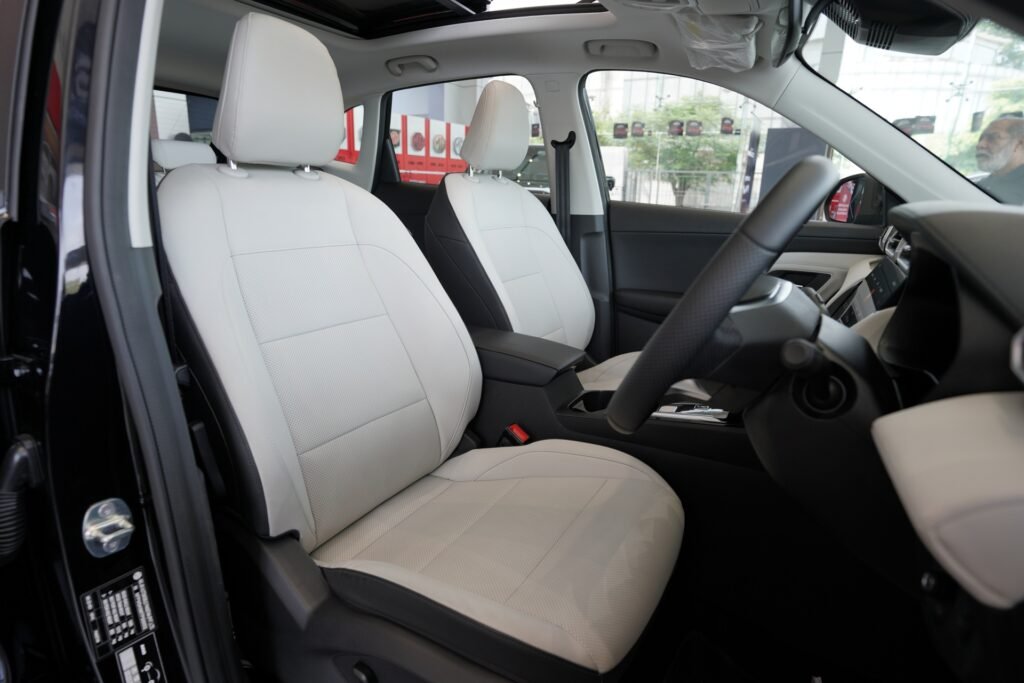
Once you get on a seat, especially the driver’s seat, the seating height is good and offers a decently tall person a good view both inside and outside the vehicle. The front windscreen is wide, and the angle is not too harsh as to make looking ahead difficult. A tall person can easily view the hood from the driving seat. You do not get a proper tuck-in feeling on the seats, but the overall grip is good. The driver’s seat offers a 6-way power-adjustable option while the passenger seat is 4-way adjustable.
Material Quality
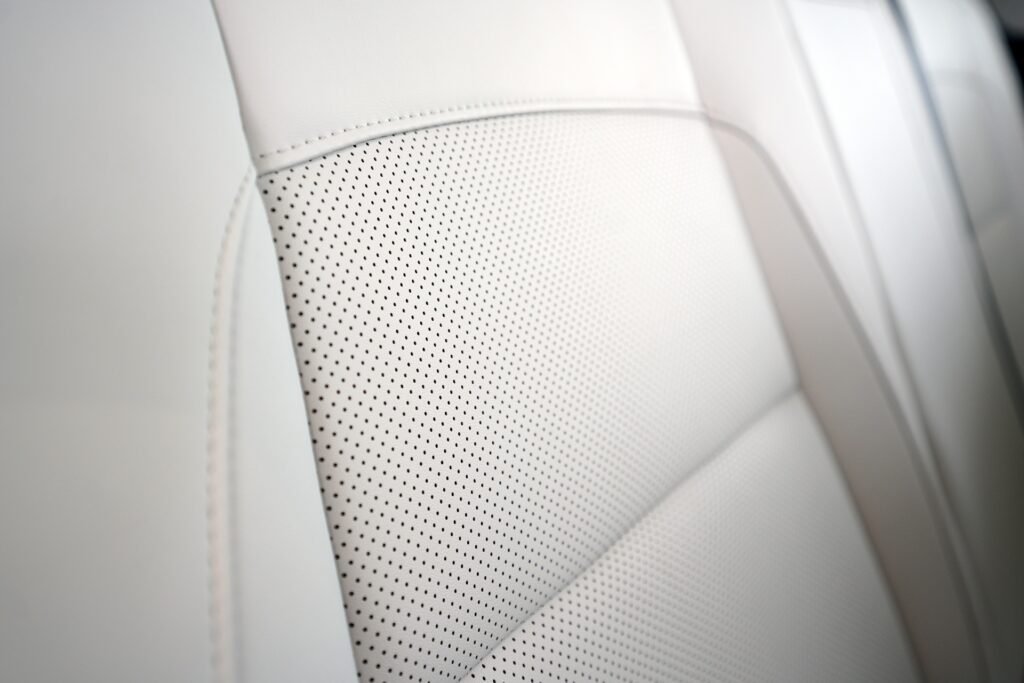
Coming to the interior materials, the MG ZS does not feel like it is the smallest offering in MG’s lineup in the SUV category. It feels premium and high-quality when you sit inside it. This is possible thanks to the dual-tone interior, which is made of leather-style upholstery. Since we tested the high-grade Essence variant, it has white leather-like upholstery with contrast stitching. This two-tone finish extends across the dashboard fascia, central armrest, and front door card armrests. This gives an excellent vibe and makes you feel like you are sitting inside a high-end premium cabin.
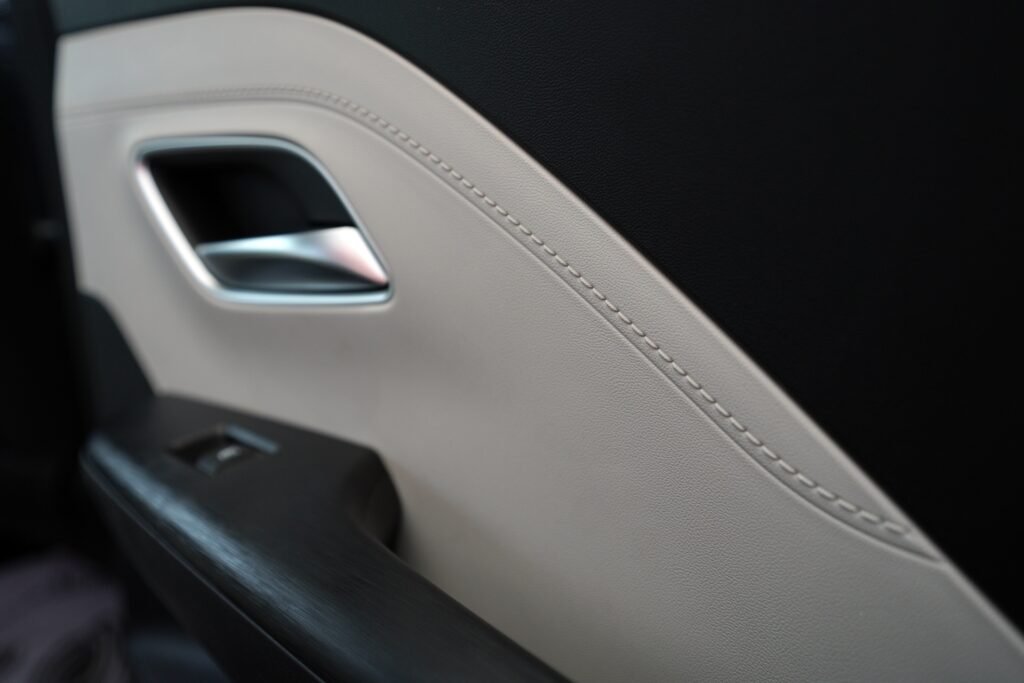
Nearly all surfaces inside the dashboard have soft-padded leatherette materials, which further add to the quality. The main theme is contrasted by high-gloss black center console surrounds and satin chrome accents. These accents are also present in the door cards in areas such as the window control pads. The driver and passenger seats are ventilated, which means that during hot summer days, the front occupants do not have to burn in the heat. Rather, with ventilated seats, both the driver and the passenger will have active cooling, making the journey a lot easier.
Rear Seats
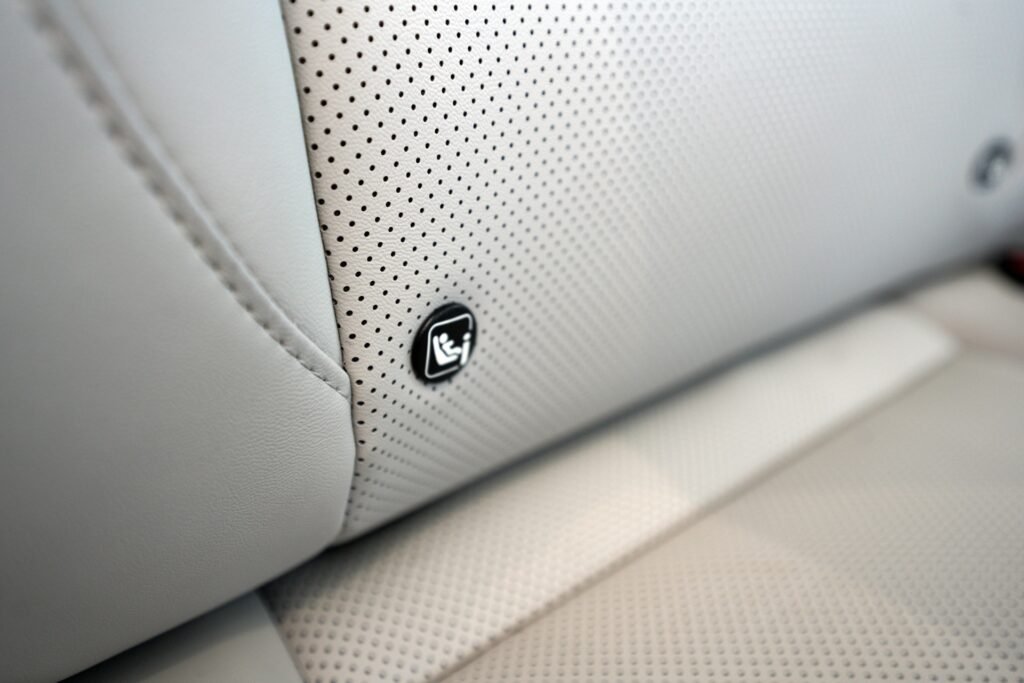
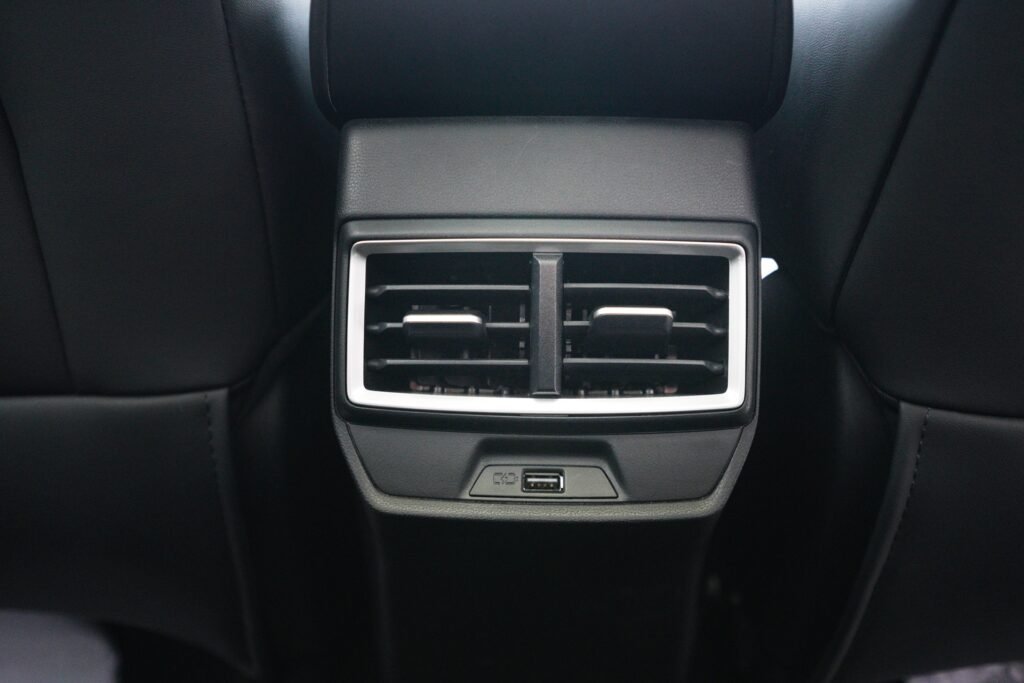
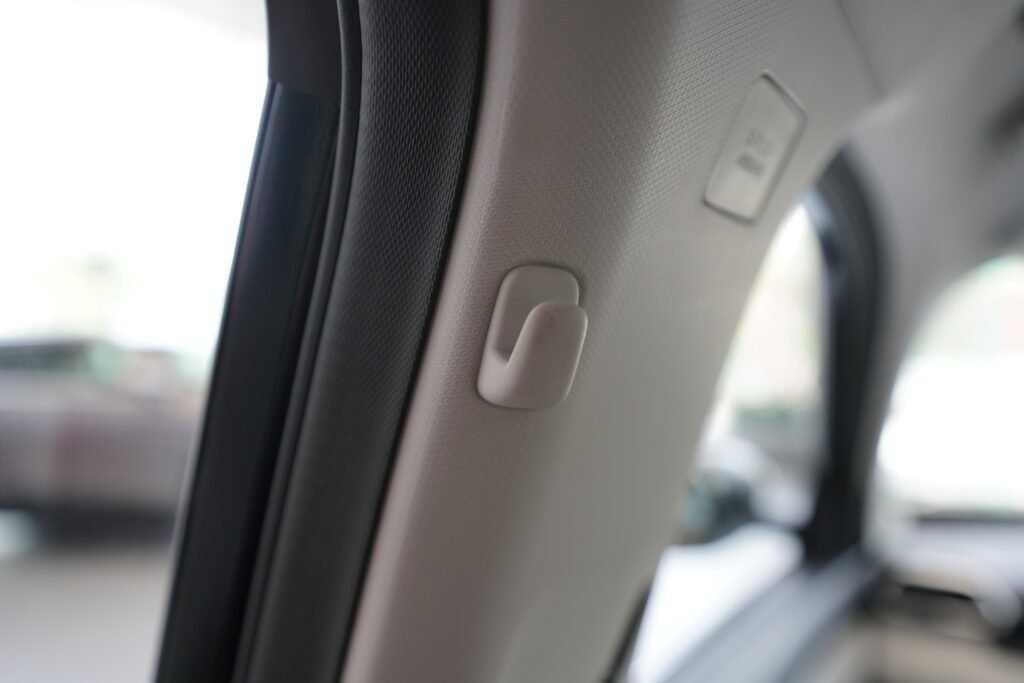
On the back, you have a 60:40 split-folding bench with three integrated headrests along with ISOFIX child seat anchor points on the outer rear seats. The cushioning is good at the back as well, but similar to most SUVs and crossovers, there is not much else for the passengers at the back. They do get dual AC vents at the back, with a chrome finish and a simple USB charging port. There is also a hanging spot in the middle pillar, but apart from these basic features, there is not much to look at here.
| MG ZS Hybrid+ Cabin Metrics | |
| Central Touchscreen | 12.3-inch HD Color Touchscreen |
| Driver Display | 7-inch HD Virtual Driver Cluster |
| Wheelbase | 2,610 mm |
| Panoramic Sunroof | Full-Length Panoramic Sunroof with Electric Blind |
| Boot Space | 443 Liters (expands to 1,457 liters) |
Does it feel like a premium car?
Yes, particularly in the Essence variant we inspected. The new MG ZS definitely feels like a proper premium car. The materials, the stitching and the finishing feel very high-quality, and the soft-touch leatherette gives a well-built, quality SUV feel to the entire interior. The seats are soft, but not too squishy, while the two-tone color gives a feel that very few interiors manage to deliver.
Technology & Infotainment
Considering the fact that the MG ZS is the smallest SUV in MG’s offering, it does come with a decent amount of technology incorporated in it. The central unit features a high-definition 12.3-inch HD color touchscreen which is slightly angled towards the driver. It controls primary infotainment, vehicle settings, ADAS settings, climate control, and media playback. The driver’s display is a much simpler 7-inch Virtual Display Driver Display, which is not as premium as the main unit, but it does the job of providing all information to the driver accurately.
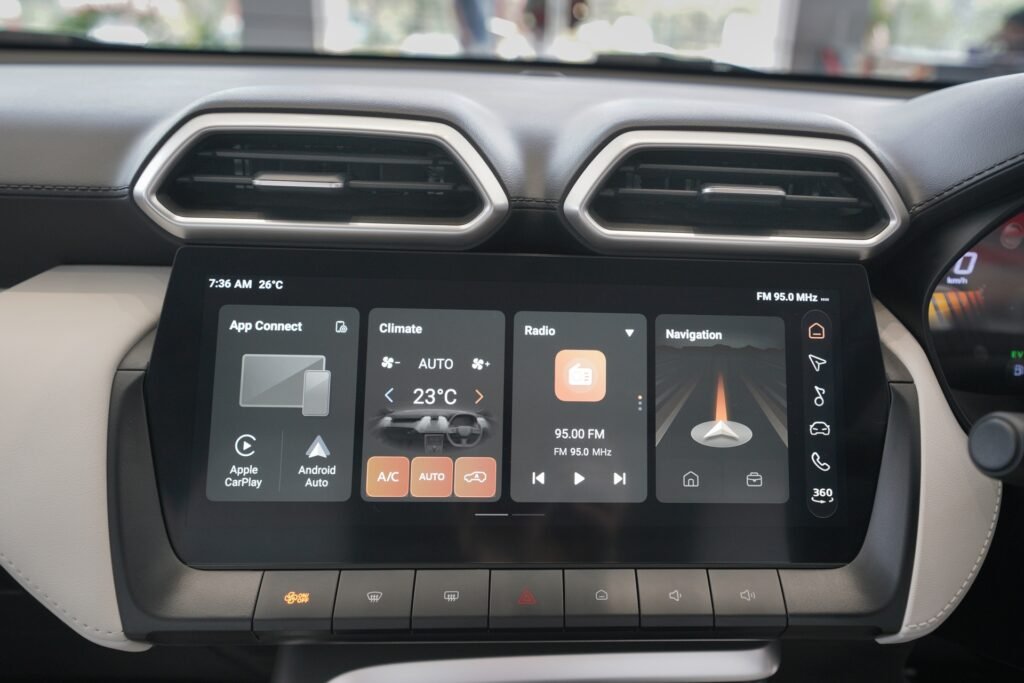
Compared with the screen in the MG HS, the MG ZS’s screen felt slower in our brief time with it. MG ZS Essence also comes with a 6-speaker audio system which has built-in 3D sound processing. Again, the speakers are not as good as those in HS, but these are fairly decent in their category. The main unit also offers Wireless Apple CarPlay and Android Auto, allowing the occupants seamless, cable-free smartphone mirroring directly onto the 12.3-inch screen.
MG ZS also supports the MG iSMART Connected Car Technology, which means that it integrates vehicle-to-smartphone connectivity via the dedicated iSMART app. This app allows the user to gain access to different features such as Remote Vehicle Status, Remote Door Lock/Unlock, and Remote Climate Control, which means that you can pre-cool the interior before getting in on hot summer days. This is very handy in Pakistan because we have more hot weather than cold weather in the country.
There is port connectivity both at the front and the back. On the front, you get 2 USB-C ports. One port is for data transfer for media or CarPlay, while the other one is dedicated to charging your devices. There are no wireless charging options in the car. On the back, you get a single USB-A charging port mounted right below the dual AC vents. One standout port is located near the internal rearview mirror, which is designed specifically for connecting dashcams without any exposed wiring. The whole layout is very convenient because the wires do not interfere with any other equipment while they are plugged in.
Space & Practicality – Is the ZS Actually Family-Friendly
Despite its overall smaller proportions, it offers plenty of space inside the cabin. The driver and passengers get generous headroom despite the panoramic sunroof. The front seats are quite wide and offer good thigh support. The fully adjustable steering wheel also ensures that the driver of any height can adjust it for their own comfort. This is a major addition to the second-gen MG ZS.
In the back, since the new ZS is 25mm longer, it adds that extra space to provide more legroom for the rear passengers. It is not spacious enough for two tall adults to sit comfortably. The center floor is not completely free of the hump, but it is relatively lower and flatter, so the third person will suffer when it comes to foot placement. Since it is relatively smaller in width, seating three adults in the back for longer journeys will not be comfortable enough, but it makes up for it with generous legroom and head space.
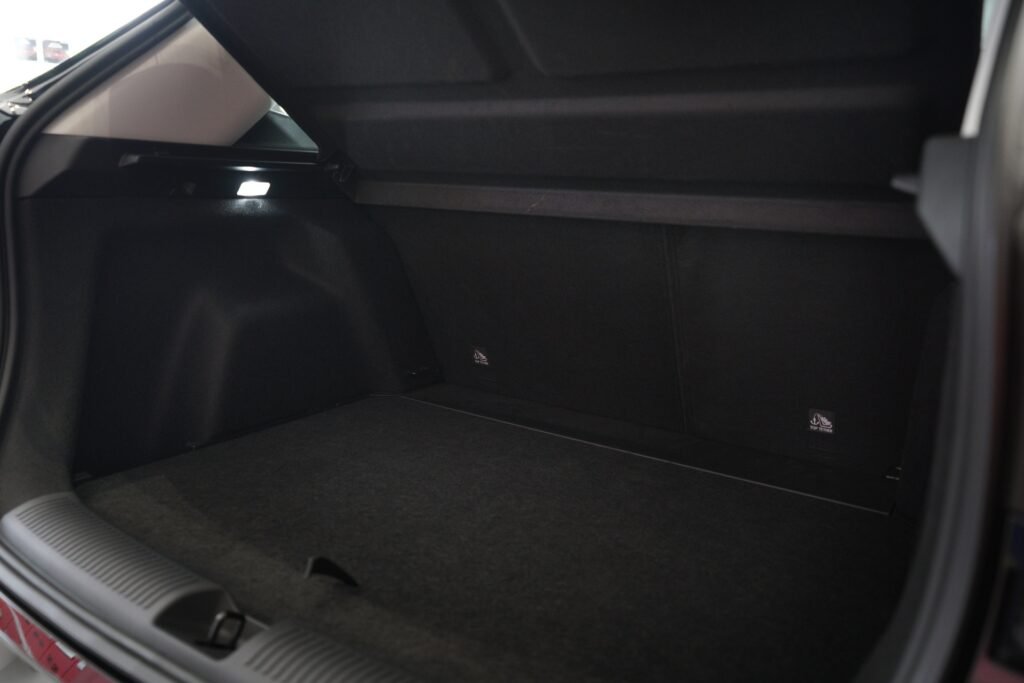
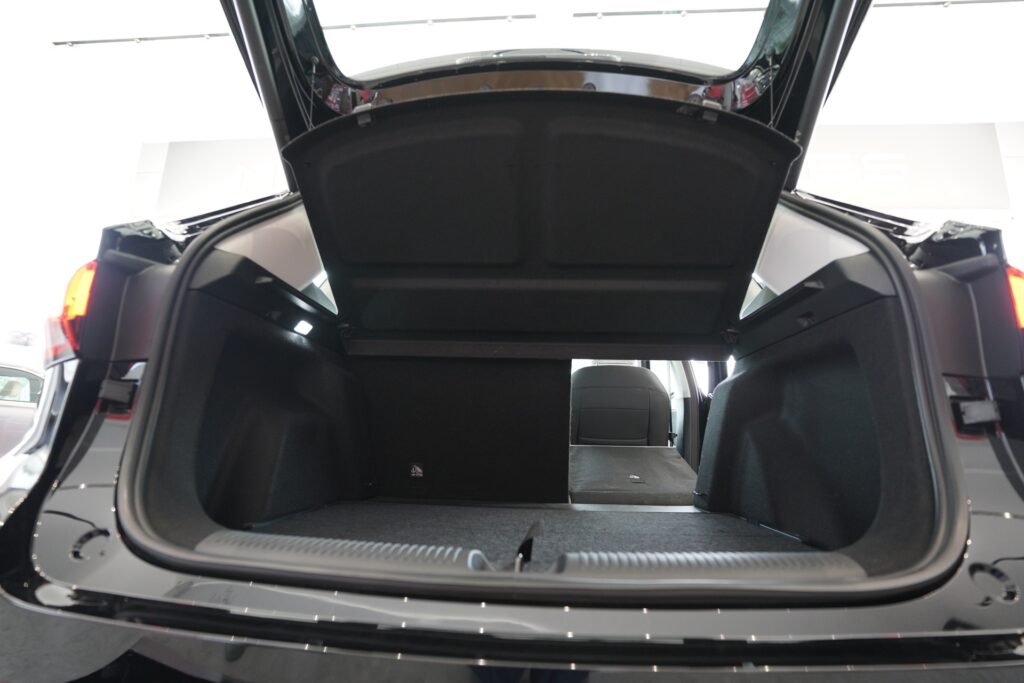
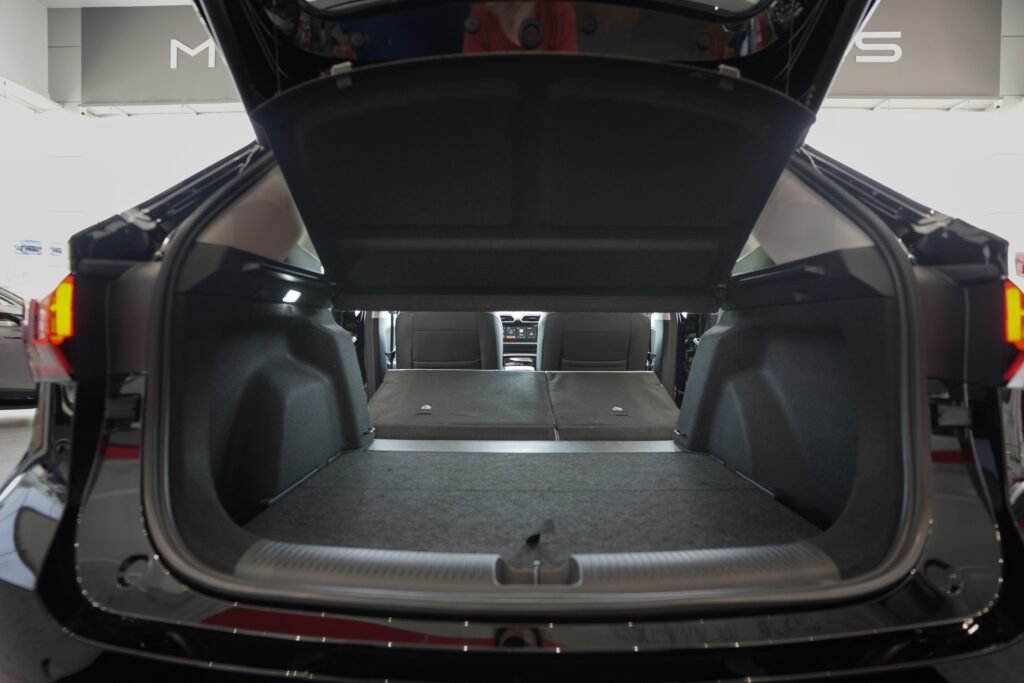
For luggage, you have a generous 443 liters of cargo capacity with the rear seats in place, which matches the petrol version as well. This is impressive because in most cases, the hybrid battery placement compromises boot space. Since the rear seat is a 60:40 split bench, you can further increase the boot space to up to 1,457 liters of flat utility space for accommodating larger items. There are also some small luggage cubbies and under-floor storage for charging cables, small tools, and other small items that may fit in there.
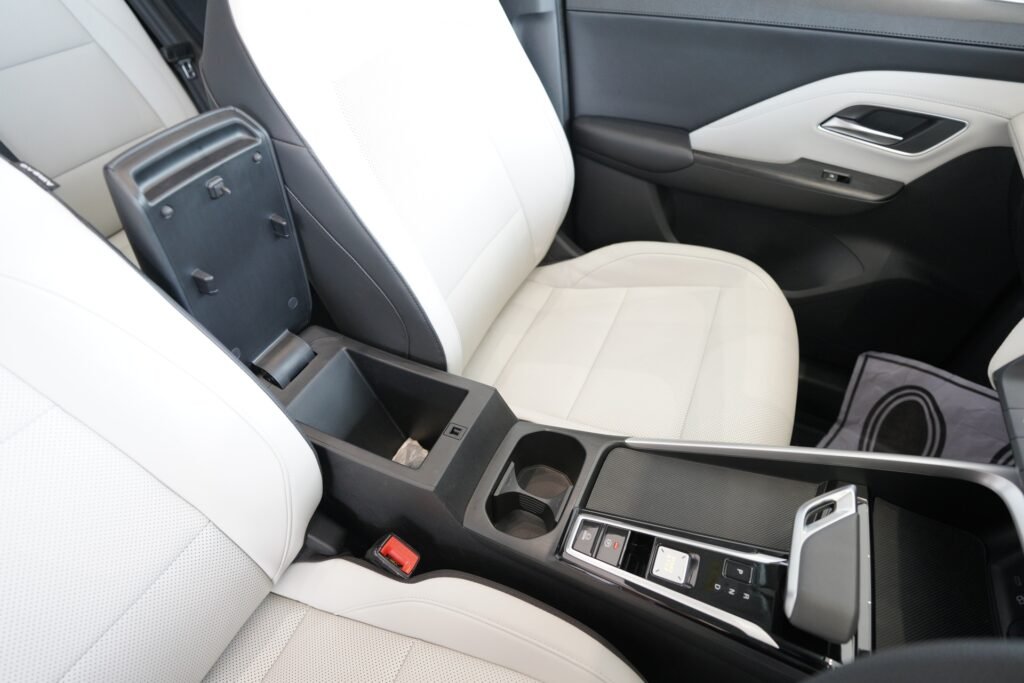
Up front, you get dual cup holders, a deep central armrest bin, and a dedicated rubberized tray for smartphone placement closer to the charging slots. All four doors offer molded bottle holders that comfortably hold 1.5-liter water bottles alongside smaller items. The glovebox is standard with a light inside it, and you also get a sunglasses holder overhead near the sunroof controls and the map lights.
Hybrid+ Powertrain – The Biggest Change
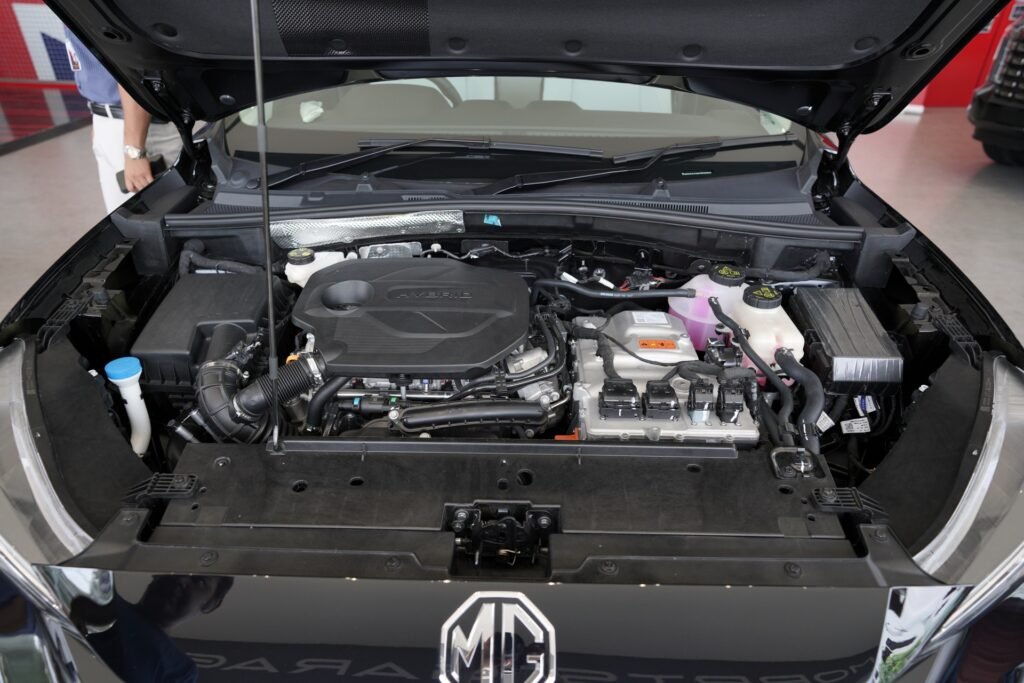
Probably the biggest difference between the new and old MG ZS is the Hybrid+ powertrain, and it is worth mentioning in its first look review. When you open its hood, it gives you a look at its tucked-in engine and the hybrid system. The Hybrid+ Essence comes with a 1.5-liter naturally aspirated petrol engine, which delivers 101 HP and 128 Nm of torque. This engine is paired with an electric motor that produces around 134 hp (100kW) and 250 Nm of torque.
This makes the combined output of the whole Hybrid+ system 212 hp and 465 Nm of torque. It is capable of accelerating from 0 to 100 km/h in just 8.7 seconds. The power is delivered to the wheels with the help of a 3-speed Dedicated Hybrid Transmission (DHT). The battery is a 1.83 kWh NCM (Lithium-ion) high-voltage battery. It is a self-charging hybrid system, meaning that it does not need to be plugged in. It charges itself through the petrol engine and regenerative braking.
For battery protection, it has an Omega-shaped cooling duct design and a composite Glass Mat Thermoplastic enclosure. It offers multiple driving modes including:
- Eco Mode: Maximizes fuel economy and prioritizes electric energy distribution
- Normal Mode: Balances power delivery and battery charge for daily driving
- Sport Mode: Holds engine revs and provides full battery assistance for maximum acceleration
Another unique feature in the MG ZS is KERS, which is short for Kinetic Energy Recovery System / Regenerative Braking. While this feature is available in many other SUVs in Pakistan, what makes the MG ZS unique when it comes to KERS is that it has three selective modes for it, which allow you to set a limit of how aggressively you want this system to store braking energy.
It comes in three options:
- Level 1 – Light
- Level 2 – Moderate
- Level 3 – Heavy
Coming to its ECU, it offers three modes based on the current power input by the driver. These include:
- EV Mode: Under light driving, the vehicle will operate in pure electric mode. This is applied at low speeds or with low throttle input.
- Series Mode: In this mode, the engine runs only to power the battery in a generator mode.
- Parallel Mode: Both the petrol engine and the electric motor drive the front wheels simultaneously for maximum acceleration.
What Does 212 HP and 465 Nm Mean?
As we mentioned earlier, the biggest difference between the old-gen ZS and the new ZS is its hybrid powertrain. From the section above, you can see that this has resulted in some pretty impressive power stats as well. With 212 HP and 465 Nm of torque, the MG ZS seems more than equipped for simple school and grocery runs. With a hybrid powertrain, it has the ability to drive beyond the traditional limits of city driving.
Since both the petrol engine and the electric motor are working to power the wheels, it manages to get additional power right off the line. Unlike REEV powertrains where the engine is merely a generator, Hybrid vehicles get the best of both worlds with an engine that serves a dual purpose and also increased power figures similar to the MG ZS. However, for now, our figures are based on the specs presented on paper. Since we have not tested the MG ZS on the road yet, we cannot fully comment on how these figures actually translate to actual driving.
ADAS & Safety
Coming to its safety features, the new MG ZS comes with 7 airbags and a 5-star ANCAP safety rating. The MG ZS also comes with a full Level ADAS system thanks to the inclusion of the Level 2 MG Pilot system. We have a dedicated MG ZS ADAS Guide which lists all of its features in detail, so if you want to jump into the details of all of its features, we suggest that you check out the dedicated article instead. Since we have not driven the vehicle yet, we cannot really comment on how the ADAS features actively perform on the road. We will share a full ADAS overview in our First Drive of the MG ZS once it goes live after spending some time with the vehicle.
What Has Actually Changed From the Previous ZS?
| Area | Previous-Generation MG ZS | New MG ZS Hybrid+ |
| Exterior Design | Older, more conventional SUV styling | Sharper and more modern design |
| Interior | Simpler cabin with older design and materials | More premium cabin with a modern layout and improved materials |
| Powertrain | Petrol engine | Hybrid+ petrol-electric powertrain |
| Performance | Conventional naturally aspirated performance | Significantly stronger combined power and torque figures on paper |
| Technology | More basic infotainment and driver display | Larger digital displays and updated connectivity |
| Comfort Features | More conventional equipment | Additional premium features, including ventilated seats and panoramic sunroof on higher trims |
| Safety | Conventional active and passive safety features | MG Pilot Level 2 ADAS suite on equipped variants |
| Practicality | Small SUV-focused package | 443-litre boot and improved overall family usability |
In short, the new MG ZS is not simply a facelift of the previous model. It brings a new design, a substantially upgraded cabin, modern technology and, most importantly, an entirely new hybrid powertrain to the nameplate.
Our First Impressions
The second-generation MG ZS Hybrid+ is a significant step forward from the model it replaces. The difference is immediately noticeable in its exterior design, but the biggest surprise comes once you step inside. The new cabin feels considerably more premium, with better materials, a modern layout and a feature set that makes the ZS feel like a far more mature product than its predecessor.
The Hybrid+ powertrain is arguably the most important change. On paper, the combination of petrol and electric power gives the ZS impressive performance figures, while the self-charging hybrid system adds an important advantage for buyers looking for improved efficiency without moving to a plug-in vehicle. Practicality also remains a strong point, thanks to a useful 443-litre boot and a cabin that offers reasonable space for a small family.
There are still areas we need to evaluate properly on the road, including ride quality, real-world performance, fuel economy, and how its ADAS systems behave on Pakistani roads. But based purely on our first interaction with the vehicle, the new MG ZS Hybrid+ leaves a far stronger first impression than the generation that came before it.
Is the MG ZS Hybrid+ Worth Considering?
Based on our first look, the MG ZS Hybrid+ is certainly worth considering if you are looking for a modern hybrid SUV in this segment. Its biggest strengths are its substantially improved interior, strong equipment list, practical boot space and the Hybrid+ powertrain, which gives it considerably more capability on paper than the previous petrol-only ZS.
The top-of-the-line Essence variant also feels genuinely premium from inside, particularly with its dual-tone cabin, soft-touch materials, ventilated seats and panoramic sunroof. The addition of MG Pilot and a comprehensive safety package further strengthens its overall proposition.
That said, its final position in the market will ultimately depend on factors we cannot judge from a showroom inspection alone. Real-world fuel economy, ride comfort, performance, refinement and the Behaviour of its driver-assistance systems will all play an important role. For now, however, the new MG ZS Hybrid+ appears to be a much more competitive and well-rounded package than the model it replaces.
MG ZS Hybrid+ First Look: Our Verdict
The second-generation MG ZS Hybrid+ is not a minor update. It is a complete step forward for one of MG’s smaller SUVs. The exterior is sharper and more modern, the cabin feels significantly more premium, and the Hybrid+ powertrain gives the vehicle an entirely new proposition in Pakistan’s increasingly competitive hybrid market.
Our first look suggests that MG has successfully addressed many of the shortcomings of the previous generation ZS. More importantly, the new model now feels like a vehicle capable of competing with the newer generation of hybrid SUVs entering Pakistan. The interior, technology, practicality, and on-paper performance figures all leave a positive impression.
For now, the MG ZS Hybrid+ has made a convincing case for itself. It is clearly a far more complete and competitive vehicle than the model it replaces. Whether that strong first impression translates into an equally convincing driving experience is something we will find out when we get behind the wheel.
Disclaimer: This First-Look Review of the MG ZS Hybrid+ is based on a vehicle on display at MG Capital in I-10/3, Islamabad. Motornama maintains absolute editorial freedom, and our conclusions are never influenced by external partnerships. Please read our Review Policy and Editorial Standards to learn more about our testing methodologies and core journalism values.
Related Articles:

